Alloy wheels
Alloy Wheel Scuff Repair: What Can and Cannot Be Fixed
Kerbed your alloys? Find out which scuffs can be repaired, when a wheel is beyond saving, how long refurbishment takes and how often it can be done.
8 minute read By Signature Alloy Wheel & Body Repairs
In short
Most alloy wheel scuffs can be repaired. As long as the structure of the wheel is sound, a technician sands the damage back, fills any deeper gouges, then primes, colour matches and lacquers the face. A single scuffed wheel typically takes one to two hours and costs far less than replacing it.
Scuffed alloy wheels can almost always be repaired. Unless the wheel is cracked, buckled or has lost metal from a structural area, a technician can sand the damage out, rebuild the profile, then colour match and lacquer the face so it looks as it did new. It is one of the cheapest cosmetic repairs there is relative to the difference it makes, and it is quicker than most people assume.
Can alloy wheel scuffs be repaired?
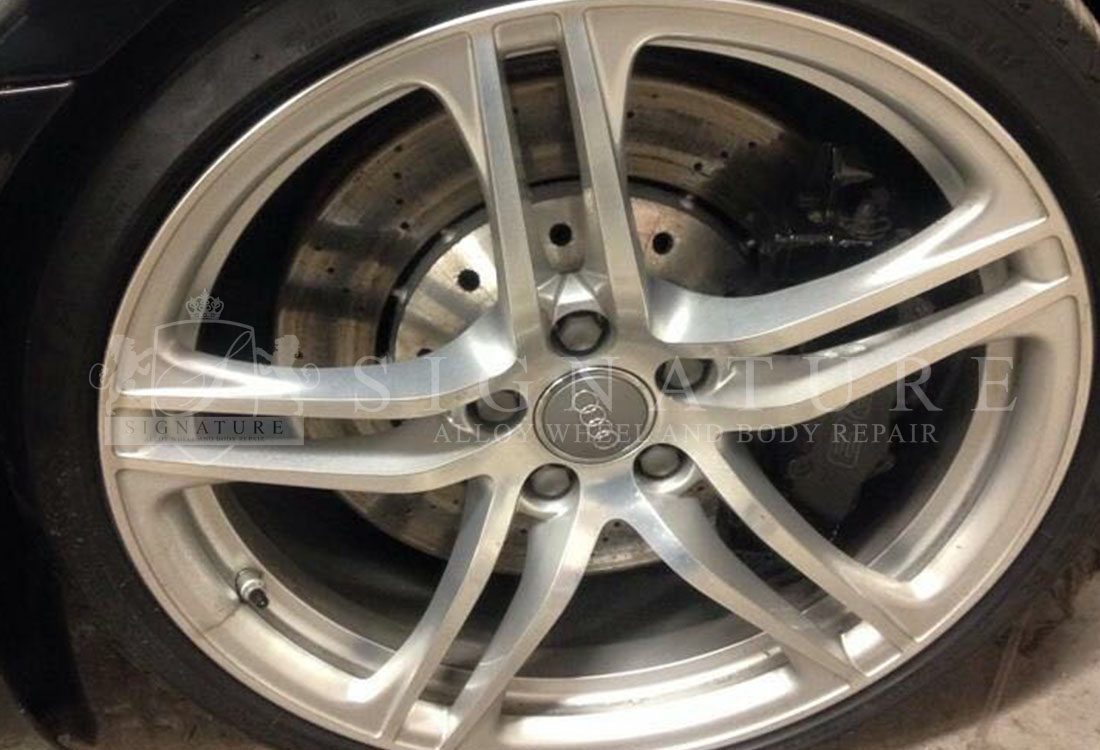
Yes. Kerb scuffs, light scrapes and scratches on the face and outer rim of an alloy wheel are routine repair work. The wheel does not need to be replaced, and in most cases the tyre does not even need to come off.
The reason so many wheels get scuffed is simple: the outer rim is the widest point of the car at ankle height, and parallel parking puts it within a few centimetres of a hard granite kerb. Misjudge it once and the kerb takes a strip of lacquer, paint and aluminium off in a single pass.
A professional repair follows a set order:
- Inspect the wheel for cracks, buckles, bent rim edges and any sign of previous repair.
- Clean and degrease thoroughly, because brake dust, tyre dressing and road film all stop coatings sticking.
- Sand the damage back through the lacquer and paint until the gouge is removed and the rim profile is even again.
- Fill any deeper gouges with a metal-compatible filler, then sand flush so the profile matches the undamaged sections.
- Mask the tyre and hub face, then apply primer.
- Apply colour matched paint, mixed to the wheel's finish and checked against the wheel itself.
- Lacquer and cure, then remove the masking and refit.
What about badly kerbed alloys?
Heavily kerbed wheels can still be repaired, provided the structure is sound. Kerb rash that has removed a visible amount of metal from the rim edge is normal repair work: the profile is rebuilt with filler, reshaped and refinished.
What takes a wheel out of repair territory is structural damage rather than cosmetic damage. Potholes, which UK roads produce in quantity every winter, cause a different sort of injury to a kerb. A pothole strike can buckle the rim, crack the barrel or split a spoke, and those faults affect how the wheel holds air, how it balances and how it carries load. Signs worth taking seriously:
- A slow puncture that keeps coming back on the same wheel
- A vibration through the steering or seat that appeared after hitting something
- A visible flat spot or wobble in the rim when the wheel is spun
- Any visible crack, however fine
Cosmetic kerbing is repairable. Structural damage means an inspection and, often, replacement. A repair shop that offers to refinish a cracked wheel without saying anything is not doing you a favour.
Will scratched alloy wheels corrode if I leave them?
Yes, over time they will. Alloy wheels are not bare metal. They carry a protective system of primer, colour and lacquer that keeps oxygen, water and road salt away from the aluminium underneath.
A kerb scuff cuts straight through all of it. Water and salt then sit against exposed aluminium, and aluminium corrodes differently to steel: instead of red rust flakes you get a white, powdery oxide that creeps under the surrounding lacquer. Once it does, the lacquer starts lifting well beyond the original scuff, and what began as a two inch scrape becomes a whole face that needs stripping. Winter accelerates it considerably, because gritted roads coat the wheels in salt every journey.
The practical point is that repairing a scuff early is a smaller job than repairing the same scuff a year later. Leaving it does not keep the cost the same, it increases it.
Can you repair an alloy wheel scuff yourself?
Light scuffs can be improved at home with an over the counter kit, but the finish will not match a professional repair. A typical kit contains grades of abrasive paper, a filler, primer, an aerosol colour and sometimes a lacquer.
If you want to try it, the order is the same as the professional process: clean and degrease the wheel and the tyre thoroughly, sand the scuff back until the damaged profile is gone, fill any deep gouges, sand flush, mask, prime, colour and lacquer. Take the preparation seriously, because almost every failed DIY wheel repair fails at the preparation stage rather than the painting stage.
The honest limitations are these. Aerosol colours are generic rather than mixed to your wheel's code, so a repaired section usually reads slightly different in daylight. Rattle can lacquer is softer than a properly baked coating and does not stand up to brake heat and wheel cleaner in the same way. And silver is far less forgiving of a patch repair than most people expect, because metallic flake orientation changes with spray distance. On a shed wheel or an older car it can be perfectly acceptable. On a lease car about to be inspected, it is a false economy.
Is it worth repairing my alloy wheels?
Yes, and the sooner the better. Whether the aim is appearance, resale value or avoiding a charge at the end of a finance agreement, alloy repair is one of the cheapest cosmetic jobs relative to the difference it makes.
Lease and PCP cars
If the car is on a lease or PCP, wheel condition is directly financial. Finance companies inspect returned cars against a published fair wear and tear standard, and every manufacturer sets a limit on how much scuffing and chipping is acceptable on a wheel rim. Anything beyond it is charged back to you, usually at a rate that comfortably exceeds what a repair would have cost. Having the wheels put right before the inspection through a lease car repair is nearly always the cheaper route.
Resale value
A set of four scuffed wheels is the single most obvious sign of a car that has had a hard life. It gives any buyer, private or trade, a reason to knock money off, and the discount they ask for is generally larger than the repair bill.
Safety and security
Kerb rash itself is cosmetic, but the impacts that cause it can also bend a rim edge, break the tyre bead seal or start a crack. Having a scuffed wheel looked at means the rest of the wheel gets checked at the same time, which is worth having in its own right.
How long does alloy wheel scuff repair take?
A single scuffed wheel is typically one to two hours of work. A full set of four takes most of a day.
Three things move that figure. How deep the damage is, because more filling and shaping means more curing time between stages. How large the wheel is, since a 20 inch rim has a lot more surface than a 17 inch one. And which finish the wheel has, because a diamond cut wheel needs machining on a lathe rather than painting, which is a different process altogether.
| Finish | How it is repaired | Typical turnaround |
|---|---|---|
| Painted or powder coated | Sand, fill, prime, colour match, lacquer | One to two hours per wheel |
| Diamond cut | Strip lacquer, skim the face on a CNC lathe, re-lacquer | Longer, and usually workshop based |
| Polished or chrome effect | Specialist process, often best replaced | Assessed case by case |
Painted repairs can be carried out mobile at your home or workplace, weather permitting. A diamond cut wheel repair needs a lathe, so it is booked differently.
How many times can an alloy wheel be refurbished?
As a rule of thumb, two to three times for a diamond cut wheel and rather more for a painted one. The limit exists because diamond cutting machines a thin layer of aluminium off the face each time, and there is only so much material to give before the wheel is compromised.
Painted and powder coated wheels have no such hard limit, since nothing structural is removed. What accumulates instead is filler and coating thickness from repeated repairs, and eventually a wheel that has been patched many times is better stripped back completely and refinished from bare metal. A technician who has the wheel in front of them is the only person who can tell you where yours sits.
How much does alloy wheel scuff repair cost?
Far less than replacing the wheel, which is the comparison that matters. A single kerbed rim repaired properly costs a fraction of a genuine replacement alloy from a main dealer, before you add a tyre refit and balance.
The price for any given job depends on:
- Wheel size. Signature repairs wheels from 18 inches up to 24 inches, and larger wheels take longer.
- Finish. Standard painted, colour changed, or diamond cut are all different processes with different costs.
- Extent of damage. A light scuff is quicker than a rim edge that needs rebuilding.
- Number of wheels. A set of four is priced better per wheel than a single.
- Location. Mobile repairs on a driveway or at work suit painted finishes; some work is better done at the unit.
Signature gives free, no obligation quotes and answers them within 24 hours. Send photographs of each damaged wheel taken in daylight through the alloy wheel repair page or ring 0161 667 0919 and describe the damage, and you will get a realistic figure rather than a guess.
Need this doing properly?
Signature repairs alloy wheels and bodywork across Greater Manchester and the North West, mobile at your home or workplace. Free quotes answered within 24 hours.