Bodywork & paint
How to Remove a Dent From a Car: Step by Step Guide
How to remove a dent from a car at home, which methods work on which damage, the tools you need and the point at which pulling it yourself makes things worse.
9 minute read By Signature Alloy Wheel & Body Repairs
In short
Shallow dents with unbroken paint on a flexible panel can often be pulled out at home using a suction dent puller, controlled heat or gentle pressure from behind. Anything creased, sharp edged, sitting on a body line or with cracked paint needs a body shop, because forcing it stretches the metal and makes the repair harder.
Whether a dent comes out at home depends on three things: how sharp it is, whether the paint has survived, and whether you can reach the back of the panel. A shallow, round dent in the middle of a door with the paint intact is worth a try. A crease along a body line, a dent with a sharp point in it, or one with cracked paint is not, because every DIY method works by moving metal, and metal that is already stretched or creased needs skilled work to put back rather than more force.
What kind of dent are you dealing with?
Identify the shape of the damage first, because that decides everything else.
| Type of dent | What it looks like | Typical cause | Realistic repair route |
|---|---|---|---|
| Door ding | Small, round, often with a raised ring | Car door in a car park | DIY pull or paintless dent removal |
| Hail dent | Multiple shallow dimples on horizontal panels | Hailstorm | Paintless dent removal |
| Crease | Long, narrow, follows a line | Contact with a post, wall or another vehicle | Body shop, usually with filler and paint |
| Sharp or pointed dent | Small area, deep, metal clearly stretched | Trolley corner, stone, tool dropped on a panel | Body shop |
| Large impact dent | Wide area, may involve more than one panel | Collision | Body shop, sometimes panel replacement |
| Bumper dent | Plastic pushed in, may spring back partially | Low speed knock or kerb | Heat and reshape, or bumper repair |
There is one more distinction worth making. Steel panels have some memory and will often move back towards their original shape when persuaded. Aluminium, used on bonnets, boot lids and doors on a growing number of cars, does not. It work hardens where it has been bent and cracks rather than stretching back, so aluminium dents are body shop work regardless of how mild they look.
How do you assess the damage before you touch it?
Wash the panel, dry it, and look at it under a light from a shallow angle. Reflections tell you far more than looking at the dent head on. A strip light, or the reflection of a straight edge such as a door frame, will show whether the dent has one smooth low point or several sharp changes of direction.
Check these before attempting anything:
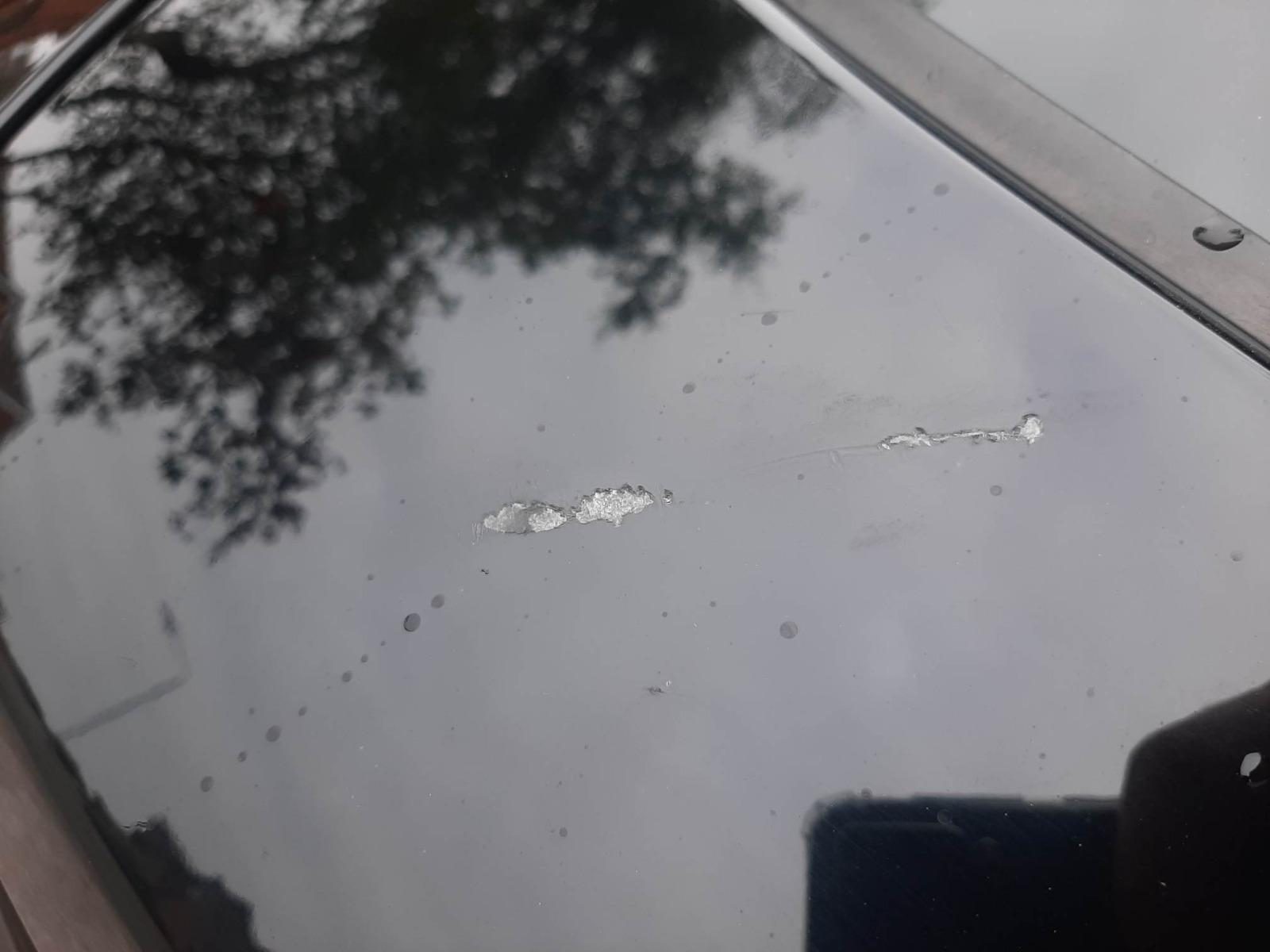
- Is the paint broken? Any crack, flake or bare metal means it is a paint repair, not a dent repair, and pulling will make the paint worse.
- Is the dent sharp? Run a fingertip across it. A gentle valley is workable. A sudden step or a point is stretched metal.
- Is it on a body line or an edge? Panel edges and swage lines are stiff and hold a crease. Nothing you can do at home will bring them back cleanly.
- Can you reach the back? Behind a door skin there is a window mechanism, wiring and impact bars. Behind a bonnet there is normally an inner frame. If you cannot get to the reverse of the panel safely, do not force access.
- Is the panel steel or aluminium? A magnet will tell you in two seconds. If it does not stick, leave it to a professional.
What tools do you need to remove a car dent?
- Suction dent puller, or a glue tab kit with a slide hammer or bridge puller
- Hair dryer or heat gun on a low setting
- Can of compressed air, held upside down when you want the cold effect
- Kettle or pan of hot water and a bucket
- Rubber plunger, the cup type rather than the flange type
- Vacuum cleaner and a plastic cup or bucket for improvised suction
- Panel beating hammer and dolly, only if you have used them before
- Clean microfibre cloths, panel wipe and washing up liquid
- Masking tape to protect surrounding paint
Which DIY dent removal methods work?
Each of these moves metal in a different way, so pick the one that matches the panel and the dent rather than working down the list.
Suction dent puller
The most reliable home method for a shallow, round dent on a flat area.
- Clean and dry the panel so the cup can seal properly.
- Wet the rim of the cup lightly to improve the seal.
- Press the puller onto the centre of the dent and pull firmly and squarely, not at an angle.
- Repeat with the cup moved slightly each time rather than pulling harder in the same spot.
- Stop as soon as the panel reads level in a reflection, because overpulling creates a high spot that is harder to fix than the original dent.
Hot water on a plastic bumper
Plastic bumpers respond to heat far better than metal panels do.
- Bring a kettle or pan of water to the boil and pour it steadily over the dent.
- Reach behind the bumper if you can and push the dent out with your hand while the plastic is warm and pliable.
- Pour more hot water if it starts to cool before it has moved.
- Rinse and dry the area afterwards.
This works because the plastic returns towards the shape it was moulded in. It does very little on steel or aluminium.
Heat and rapid cooling
- Warm the dent for two or three minutes with a hair dryer held moving, never held still.
- Turn off the heat, invert a can of compressed air and spray the same area for around 30 seconds.
- The sudden contraction can pop a shallow dent back out.
- Keep the heat source moving and off the paint's melting point. A heat gun on full will blister clear coat in seconds.
Plunger method
- Wet both the plunger cup and the panel.
- Place the cup over the dent and push in, then pull back in a steady rhythm.
- Work outwards from the centre if the dent is wide.
- Rinse and dry when finished.
A plunger is a crude version of a suction puller. It is worth a try on a large, shallow dent in a door or a wing where you have nothing else to hand.
Vacuum and cup method
- Cut a small hole in the base of a plastic cup or bucket.
- Seat the open end over the dent so it seals against the paint.
- Hold the vacuum hose to the hole and switch it on to create suction inside the cup.
- The dent may lift with the vacuum. Release the suction gently rather than dragging the cup off.
Glue tab dent pulling kit
The closest thing at home to how a professional works, and the method that most often gives a usable result.
- Clean the area thoroughly with panel wipe so the glue bonds properly.
- Apply hot glue to a tab sized to the dent, not the largest tab in the box, and press it onto the lowest point.
- Let the glue set fully. Pulling early tears the glue off, or worse, takes clear coat with it.
- Attach the bridge puller or slide hammer and apply gradual tension.
- Release the tab with the alcohol supplied in the kit rather than twisting it off.
- Tap down any high spot with the knockdown tool and a light touch.
Hammer and dolly
This is a skilled technique and is easy to make worse. The dolly is held against the back of the panel while the hammer works the front, and the aim is to bring the metal up gradually from the outside of the dent inwards, not to hit the middle. Any panel finished this way will need filler, primer and paint afterwards, so it is only worth attempting if you are prepared to refinish the panel.
What is paintless dent removal and when is it used?
Paintless dent removal (PDR) is the technique of massaging a dent out from behind the panel with specialist rods and picks until the metal returns to its original shape, with no filler and no repainting. A technician reads the panel through a reflected line board and works the low point up in small increments, tapping down the raised ring around the dent as they go.
It is the preferred method whenever the paint is intact, because it keeps the original factory finish. That matters for value, for lease inspections, and because no repaint ever matches a factory bake exactly across a whole panel. PDR suits door dings, hail damage, shallow dents in the middle of panels and many creases that have not split the paint.
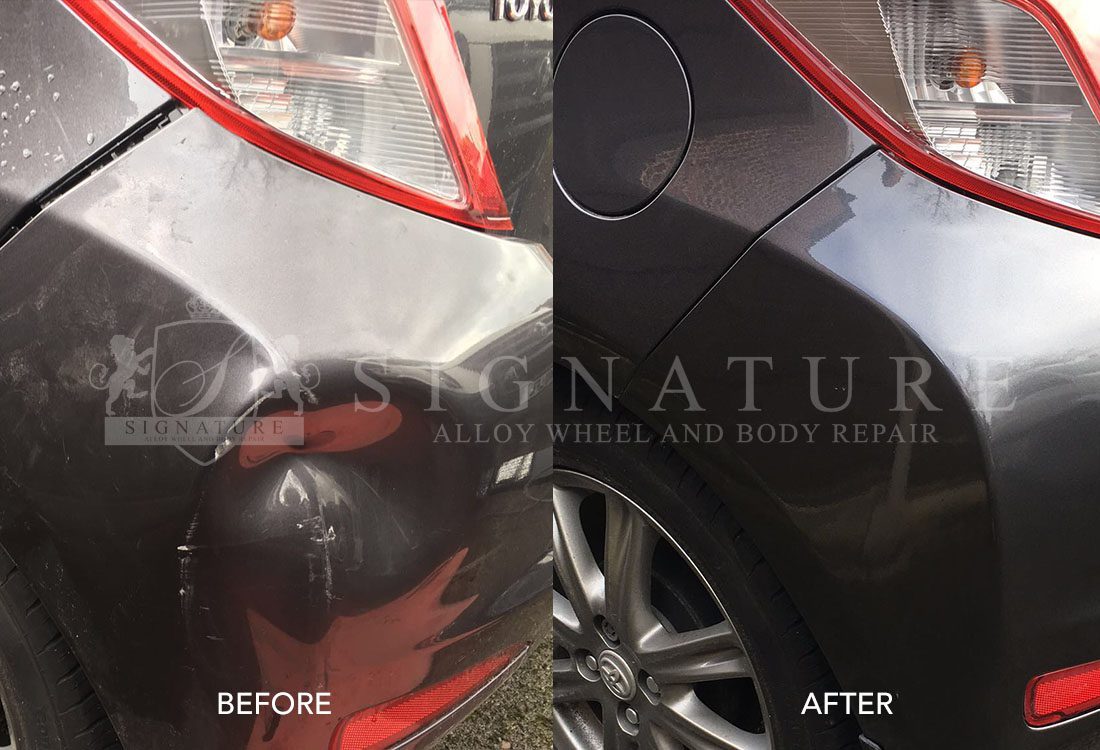
It cannot be used where the paint has cracked, where the metal has been stretched too far, on very sharp dents, or where the back of the panel is inaccessible. In those cases the panel is filled, primed and repainted, or replaced if the damage is severe. Our mobile dent repair service covers both routes, so the assessment decides the method rather than the other way round.
When should you stop and call a body shop?
Stop as soon as the paint is involved, the metal is creased, or your attempt has made the panel look worse rather than better. Those are the three points at which a home repair stops saving money.
There are a few other cases worth handing over:
- Damage on a panel edge, wheel arch lip or swage line
- Aluminium panels of any kind
- Dents on or near a sensor, parking camera or radar unit behind the bumper
- Anything on a lease or company car that will face a handback inspection, where a poor DIY repair is charged as damage
- Multiple dents from hail, where consistency across the whole panel matters more than any individual dent
How do you avoid dents in the first place?
- Park at the end of a row or away from other cars where you can, and avoid spaces next to trolley bays.
- Reverse into tight spaces so you have more control on the way out.
- Fit door edge guards if you regularly park in narrow bays.
- Keep bins, ladders and bikes away from the car in a tight garage or driveway.
- Leave more space behind lorries and tippers on motorways, where loose stone does most of its damage.
- If severe hail is forecast and the car lives outside, a thick cover or a few hours in a car park with a roof is cheaper than the repair.
For anything you would rather not attempt yourself, get a free quote with a couple of photos of the damage. Signature has been repairing dents since 2008, from the body shop at Unit C, The Yard, Rear of Constellation Mill in Radcliffe and mobile across Greater Manchester, Lancashire, Cheshire, Merseyside and West Yorkshire, with a guarantee on parts and workmanship.
Need this doing properly?
Signature repairs alloy wheels and bodywork across Greater Manchester and the North West, mobile at your home or workplace. Free quotes answered within 24 hours.