Bodywork & paint
How to Repair a Scratch on a Car: Step by Step Guide
How to repair a car scratch: the fingernail test that tells you how deep it goes, then sanding, compounding, touching in paint and knowing when to stop.
9 minute read By Signature Alloy Wheel & Body Repairs
In short
Start with the fingernail test. If your nail glides over the mark it sits in the clear coat and will polish out with compound and a soft pad. If your nail catches, the paint is broken and the scratch needs touching in with colour matched paint, or a professional repair once primer or bare metal shows.
A scratch is repairable at home when it sits in the clear coat only. Run a fingernail lightly across it. If the nail glides over, you are looking at a surface mark that compound and polish will remove. If the nail drops into the scratch, the damage has gone through the colour and needs paint, not polish. Getting that judgement right before you start saves an afternoon spent rubbing at damage that was never going to buff out, and stops you sanding through good paint in the process.
How do you tell what kind of scratch you have?
Wash the panel first, then use the fingernail test and good light. Dirt and dried polish sit in a scratch and make it look far deeper than it is, so a scratch that vanishes after a wash was only ever dirt in the texture of the clear coat. Move around the panel and look at it from a shallow angle. Daylight is best, and a torch held to the side will show whether the mark carries colour in it or is just a groove in the lacquer.
| Type of scratch | What you see | Fingernail test | Repair route |
|---|---|---|---|
| Clear coat scratch | A white or grey hairline mark, body colour still visible underneath | Nail glides across | Compound and polish |
| Basecoat or primer scratch | A dull line in a different shade, often light grey or off white | Nail catches slightly | Touch in paint, then flat and polish |
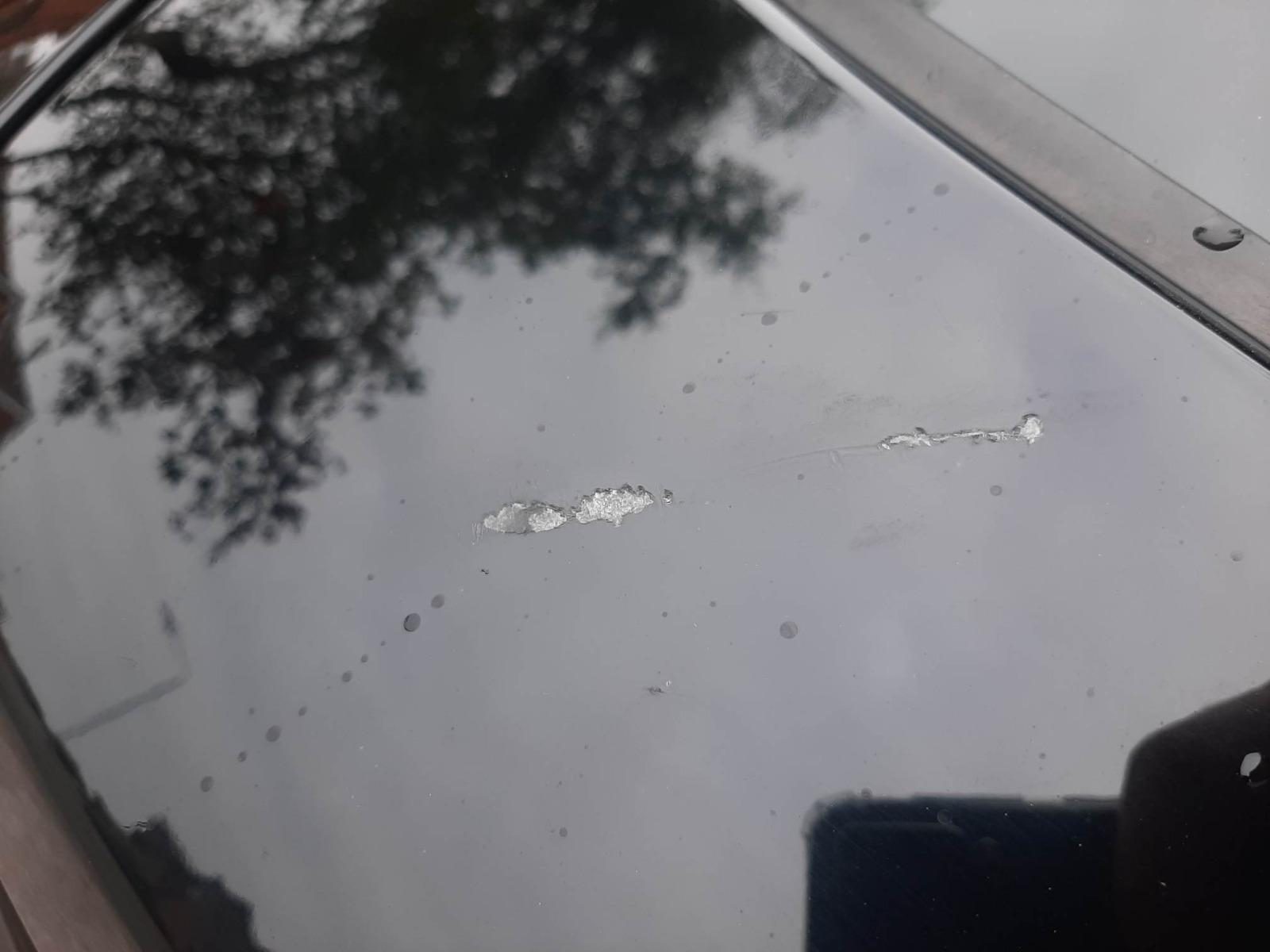
| Scratch to bare metal | Bright silver or dark steel showing along the groove | Nail drops in clearly | Prime, paint, lacquer, best done professionally |
Modern car paint is built in layers: a thin primer for adhesion and corrosion protection, a basecoat that carries the colour and any metallic flake, and a clear coat on top that provides the gloss and the UV protection. Almost all of the depth you can safely remove sits in that clear coat, and there is far less of it than people assume. That is why the fingernail test matters so much.
Which repair method suits which scratch?
Match the method to the depth, not to how bad the scratch looks from ten feet away.
| Method | Best for | What it will not do |
|---|---|---|
| Polishing compound by hand or machine | Clear coat scratches, swirl marks, wash marks | Fill anything the nail catches on |
| Scratch repair kit | Short clear coat scratches and small chips on solid colours | Blend metallic flake convincingly |
| Touch in paint from your paint code | Chips and scratches through to primer | Level itself, it needs flatting afterwards |
| Professional SMART repair | Scratches, scuffs and chips confined to one panel or panel section | Fix creased or split panels |
| Panel repaint | Long or multiple scratches, damage across a body line | Be worth it on a very small mark |
Touch in paint is only as good as the colour code you buy it against. The code is usually on the VIN plate, which sits in the driver's door shut, under the bonnet on the slam panel, or in the boot near the spare wheel well on many cars. Ordering by model and year alone is how people end up with a repair that stands out more than the scratch did.
How do you polish out a clear coat scratch?
Work wet, work slowly, and stop earlier than you think you need to.
- Wash and dry the panel. Grit dragged across paint under a pad will add more scratches than you remove.
- Decontaminate if the paint feels rough. A clay bar or fallout remover lifts bonded contamination that would otherwise sit under the pad.
- Mask the edges. Tape off any adjacent trim, rubbers and body lines. Paint is thinnest on a sharp edge and that is where people burn through.
- Only sand if compound alone will not shift it. If you do, use 2000 grit wet and dry, kept genuinely wet with a spray bottle, followed by 3000 grit. Sand along the scratch, not across it, and use very light pressure.
- Apply compound. A pea sized amount on a microfibre applicator or a foam pad, worked over a small area at a time in overlapping passes rather than tight circles.
- Check your progress often. Wipe the residue off with a clean microfibre and look at the mark under a torch. Each check tells you whether to continue or stop.
- Refine with a finishing polish. Compound leaves its own fine haze, and a lighter polish clears it.
- Protect the area. A wax or sealant goes over the top once the panel is clean and dry. Leave it to haze, then buff off with a clean cloth.
The single biggest cause of a botched DIY repair is carrying on past the point where the scratch stopped improving. If three or four rounds of compound have not shifted it, it is not a clear coat scratch and no amount of extra work will change that.
How do you repair a scratch that has gone through the colour?
Fill it with colour matched paint and build the level up slowly, rather than trying to fill it in one pass.
- Clean the scratch with a panel wipe or isopropyl alcohol to remove wax and grease. Fresh paint will not stick to polish residue.
- Remove any lifted or flaking edges with a fine abrasive, otherwise they will show as a ridge under the new paint.
- Apply the basecoat in thin coats using a fine brush or a cocktail stick, not the oversized brush in the lid. Aim to sit the paint inside the scratch, not spread it over the good paint either side.
- Let each coat flash off before the next one. Several thin coats always beat one thick coat, which will sink and shrink as it cures.
- Once the colour sits very slightly proud of the surrounding paint, apply clear coat over the top.
- Leave it to harden properly, several days at least in a British spring or autumn, before flatting the high spot back with 3000 grit and polishing it level.
Metallic and pearl finishes are where home repairs come unstuck. The flake in a factory finish is laid down by a spray gun and lies flat and even. Brushed on paint traps the flake at random angles, so the repair reads as a dark or patchy spot from certain viewing angles even when the colour code is exactly right. On a metallic, a professional scuff and scratch repair is usually the difference between an invisible repair and one you will always see.
What should you do if the scratch has reached bare metal?
Seal it quickly, because exposed steel starts corroding as soon as it gets wet. On UK roads that means winter salt, standing water and months of damp air working on the same few square millimetres. Surface rust can appear within a few weeks, and once it creeps under the surrounding paint it lifts the edges and turns a small repair into a much larger one.
If you cannot get it repaired straight away, degrease the area and put a dab of touch in paint over the metal purely as a temporary seal. That is not the repair, it just buys time. A proper repair needs the rust removed back to sound metal, an etch or high build primer, colour and lacquer. Aluminium panels, which are increasingly common on bonnets and doors, need their own primer system and will corrode differently to steel.
What tools and materials do you need?
- Two buckets, a wash mitt and car shampoo
- Microfibre cloths, several, and a separate one for each stage
- Polishing compound and a finishing polish
- Foam applicator pads, or a dual action machine polisher if you have one
- 2000 and 3000 grit wet and dry paper with a small sanding block
- Spray bottle of water with a drop of shampoo in it
- Masking tape
- Panel wipe or isopropyl alcohol
- Touch in paint matched to your paint code, plus clear coat, if the scratch is through the colour
- Wax or paint sealant
What mistakes make a scratch worse?
The common ones all come down to being too aggressive too early.
- Dry sanding. Without water the paper clogs, digs in and leaves deeper marks than the original scratch.
- Working in direct sun or on a hot panel. Compound dries out and grabs, which causes hazing and holograms.
- Using an aggressive cutting compound on a light mark. Start with the least aggressive option that could work and step up only if needed.
- Scrubbing in tight circles. Straight overlapping passes give a more even result and are less likely to concentrate heat in one spot.
- Filling a scratch with a heavy wax or glaze. It hides the mark for a few washes, then it reappears and you have lost the time.
- Automatic brush car washes. Old brush installations put fine swirl marks into clear coat and will undo careful polishing quickly.
How do you stop your car getting scratched?
Most damage happens when the car is parked, not when it is moving.
- Park away from other vehicles where you have the choice, and avoid the ends of aisles and the spaces next to trolley bays.
- Watch out for overgrown hedges and brambles on narrow lanes, which will drag fine scratches the length of a wing.
- Keep wheelie bins and bicycles clear of the car in a tight driveway or garage.
- Wash with two buckets and a grit guard, and dry with a clean microfibre rather than an old towel.
- Wax or seal the paint a couple of times a year, which gives contamination something to sit on other than the clear coat.
- Consider paint protection film on high impact areas such as the leading edge of the bonnet and the sills if you cover a lot of motorway miles.
When is a professional scratch repair the better option?
Get it repaired properly when the scratch crosses a body line, runs across more than one panel, sits on a metallic or pearl finish, or has reached bare metal. Those are the cases where a home repair either will not hold or will be visible from every angle, and where the cost of putting a poor attempt right is higher than the original repair would have been.
A mobile SMART repair handles most single panel scratches without the car going into a body shop for days. The damaged section is prepared, painted and blended into the surrounding panel, and the work is normally done on your drive or at your workplace in a few hours. Signature has been repairing scratched paintwork since 2008 from the body shop in Radcliffe and across Greater Manchester, Lancashire, Cheshire, Merseyside and West Yorkshire, and quotes are free and answered within 24 hours if you want a view on whether a scratch is worth tackling yourself.
Need this doing properly?
Signature repairs alloy wheels and bodywork across Greater Manchester and the North West, mobile at your home or workplace. Free quotes answered within 24 hours.