Maintenance
Common Car Problems: Symptoms, Causes and What to Do
The faults drivers meet most often, from misfires and brake squeal to warning lights and worn suspension. What each symptom means and how urgent it really is.
11 minute read By Signature Alloy Wheel & Body Repairs
In short
Most common car problems announce themselves first as a noise, a warning light, a vibration or a change in how the car drives. Squealing brakes mean worn pads, a rough idle points to a misfire, a rising temperature gauge means stop now, and a pull to one side usually means tyres or alignment.
Most car faults give you warning before they strand you. A noise that was not there last week, a light that stays lit after start up, a vibration through the seat, a smell of hot coolant at the traffic lights. Learning to read those signals is what separates a cheap fix from an expensive one.
This guide covers the faults we see most often on cars around Greater Manchester, what each symptom usually means, and how quickly it needs dealing with.
Which car problems are the most common?
Worn brake pads, tired batteries, uneven tyre wear, misfires and worn suspension account for the majority of faults that put a car into a garage. Almost all of them start with a symptom you can notice yourself.
| Symptom | Usual cause | How urgent |
|---|---|---|
| One click, engine will not turn over | Flat battery or failing starter motor | Same day |
| High pitched squeal when braking | Brake pads near the end of their life | Within a week |
| Grinding when braking | Pads worn through, discs being cut | Stop driving, book immediately |
| Steering vibrates above about 50 mph | Wheel out of balance or a buckled rim | Within a week |
| Car pulls to one side | Tyre pressures, alignment or a sticking caliper | Within a week |
| Rough idle, flat spot on acceleration | Misfire from plugs, coils or injectors | Soon. Immediate if the engine light flashes |
| Temperature gauge climbing | Coolant loss, thermostat or a failed fan | Stop as soon as it is safe |
| Knocking or clonking over bumps | Worn dampers, drop links or bushes | Within a week |
| Rattle from underneath at idle | Loose heat shield or exhaust mounting | Not urgent, but it will get worse |
| Fuel economy has dropped noticeably | Air filter, tyre pressures, plugs or a dragging brake | Non urgent, worth investigating |
What causes engine problems and how do you spot them?
Engine faults usually show up as a starting problem, a rough running problem or a power problem, and each group has a short list of likely causes.
The engine will not turn over
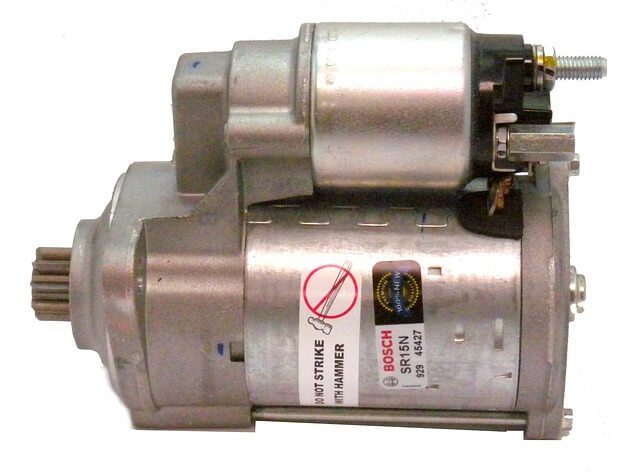
If you hear a single sharp click and nothing else, you are looking at either a flat battery or a failing starter motor. A battery that is completely flat usually gives you dim or dead dashboard lights as well. A battery with enough charge to light the dashboard brightly but not enough to spin the engine is more often a starter motor or a poor earth connection.
Rapid machine gun clicking is nearly always the battery rather than the starter. Check the terminals first: corrosion around the posts is common and easy to clean off.
The engine misfires or runs roughly
A misfire feels like a stumble at idle and a hesitation under load, and it often comes with a flashing engine management light. The usual causes are worn spark plugs, a failed ignition coil, a blocked or leaking injector, or an air leak in the inlet system.
Plugs and coils are consumable parts. If the car has never had plugs and it is past the service interval in the handbook, start there. A flashing engine light means stop driving, because raw fuel passing into the exhaust destroys catalytic converters quickly.
The engine overheats
Overheating is one of the few faults where continuing to drive can write off the engine in a matter of minutes. Warped cylinder heads and blown head gaskets both come from a few miles too many with the needle in the red.
The common causes are a coolant leak, a stuck thermostat, a failed cooling fan or fan relay, a blocked radiator, or a failing water pump. Check the coolant level monthly when the engine is cold, and look for white or coloured crust around hose joints, which shows where coolant has been weeping and drying.
The car has lost power
A car that will not pull like it used to normally has a restriction somewhere. A clogged air filter, a blocked fuel filter, tired oxygen sensors, a partially blocked catalytic converter or diesel particulate filter, and on turbo engines a split boost hose are all common.
Diesel particulate filters block on cars used only for short trips. If that is your usage pattern, a longer run at motorway speed once a fortnight helps the filter regenerate properly.
What do strange noises from a car mean?
Where the noise comes from and when it happens narrows the cause down faster than anything else.
| Noise | When it happens | Likely cause |
|---|---|---|
| High pitched squeal | Braking, sometimes only when cold | Worn pads or the wear indicator touching the disc |
| Harsh grinding | Braking | Pads worn through to metal |
| Rhythmic humming that rises with speed | Constant while driving | Worn wheel bearing or badly worn tyres |
| Clicking on full lock | Turning slowly | Worn constant velocity joint |
| Knocking or clonking | Over bumps and speed bumps | Worn drop links, bushes or dampers |
| Grinding or crunching on gear changes | Changing gear | Low gearbox oil, worn clutch or synchromesh |
| Deep knocking from the engine | Under load, worse when hot | Low oil level, poor fuel quality or internal wear |
| Rattle from underneath | Idle and low speed | Loose heat shield or exhaust mounting |
| Hissing after switching off | Immediately after a drive | Coolant or vacuum leak |
A noise that changes with road speed points at wheels, tyres, bearings or brakes. A noise that changes with engine speed while the car is stationary points at the engine or its ancillaries. That single test separates most cases.
What are the dashboard warning lights telling you?
Warning lights are colour coded, and the colour tells you the urgency before you identify the symbol. Red means stop as soon as it is safe. Amber means a fault has been logged and needs attention soon. Green and blue are information only.
- Engine management light. A fault in the engine or emissions system. Steady means get it read soon. Flashing means stop.
- Battery light. The charging system is not keeping up. Usually the alternator, its belt, or a failed battery. Switch off what you can and get to a garage before the car stops.
- ABS light. The anti lock system has failed its self test. The normal brakes still work, but the ABS may not intervene in an emergency stop. It is an MOT failure.
- Airbag light. The restraint system has a fault, which can mean the airbags will not deploy in a collision. Also an MOT failure.
- Oil pressure light. Red, and the most serious of the lot. Stop immediately. Driving with no oil pressure can destroy an engine in under a minute.
- Tyre pressure light. Usually a slow puncture, a leaking valve or a damaged rim. Check pressures cold before assuming the sensor is at fault.
A code reader will tell you which fault has been stored, but a code is a starting point, not a diagnosis. A code that names a sensor often means the sensor is reporting a real problem elsewhere rather than being faulty itself.
Why do tyres wear unevenly or lose pressure?
Uneven wear is almost always caused by pressures, alignment or worn suspension, and the wear pattern tells you which.
- Both edges worn, centre fine. Under inflation. Check pressures monthly when the tyres are cold.
- Centre worn, edges fine. Over inflation.
- One edge only. Camber or toe out of specification, or a worn suspension component letting the wheel move.
- Scalloped or feathered patches. Worn dampers or bushes letting the tyre bounce.
The legal minimum tread depth in the UK is 1.6 mm across the central three quarters of the tyre, around its whole circumference. Grip in standing water falls away long before that, so most tyre fitters advise changing at around 3 mm. Check pressures against the plate in the door shut or fuel flap, not against the number moulded into the tyre sidewall, which is a maximum rather than a recommendation.
Why does my car pull to one side or shake through the steering?
A pull usually comes from tyre pressures, alignment or a brake that is not releasing, while a shake usually comes from wheel balance or brake discs.
Kerb strikes and potholes knock alignment out easily, and Manchester roads provide plenty of both. Left unchecked, misalignment scrubs a set of tyres out in a few thousand miles. A four wheel alignment on proper measuring equipment resets camber, caster and toe to the manufacturer's figures.
Vibration that appears at a particular speed and fades again above it is classic wheel imbalance. Vibration felt only through the brake pedal or steering wheel while braking points at discs that have worn unevenly or distorted. If a kerb impact caused it, the wheel itself may be buckled, which balancing cannot cure. A buckled or cracked alloy needs straightening or replacing, and a mobile alloy wheel repair can deal with the kerb damage at the same time.
Why has my fuel economy dropped?
Fuel economy falls when the engine has to work harder or burn more fuel for the same output, and there is a short list of likely reasons.
- Under inflated tyres, which raise rolling resistance
- A clogged air filter starving the engine of air
- Worn spark plugs causing an incomplete burn
- Failing oxygen sensors making the engine run rich
- A brake caliper that is sticking and dragging
- A roof box or bars left on all year
- Cold weather and short journeys, which is normal rather than a fault
Work through the cheap and easy items first. Tyre pressures and an air filter cost very little and account for a surprising number of complaints.
Why has the air conditioning stopped blowing cold?
Air conditioning that blows cool rather than cold has usually lost refrigerant, because every system leaks slowly over the years.
A regas will fix a system that has simply gone low over time. If it goes flat again quickly, there is a real leak, most often at a condenser stone chipped by road debris at the front of the car, or at a corroded pipe union. Running the air conditioning for ten minutes once a fortnight, including through winter, keeps the compressor seals lubricated and cuts the chance of a leak developing.
A musty smell when you switch the fan on is a separate issue: bacteria in the evaporator, cured with an antibacterial treatment and a new pollen filter.
How do you know if the suspension is worn?
Worn suspension shows up as a bouncy or crashy ride, uneven tyre wear and a car that feels vague or floaty at speed.
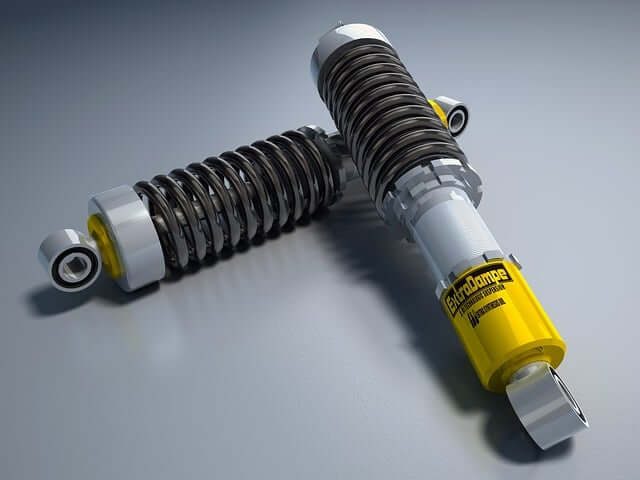
Dampers, or shock absorbers, are the usual culprit. They wear gradually, so drivers often do not notice until the difference is dramatic. Signs to look for:
- The car carries on bouncing after you push down hard on a wing and let go
- Oil or damp staining down the body of the damper
- Nose dive under braking that feels worse than it used to
- Knocking over bumps, which is usually drop links or anti roll bar bushes rather than the dampers themselves
- Scalloped tyre wear
Worn suspension lengthens stopping distances and upsets alignment, so it is a safety item rather than a comfort one. Dampers are replaced in pairs across an axle.
What causes exhaust rattles and vibration?
An exhaust rattle is nearly always a loose heat shield, a broken rubber mounting or a corroded joint, and it is cheap to fix if you catch it early.
The rattle usually appears at a specific engine speed, often around idle or just above, and disappears as the revs rise. A blowing exhaust makes a distinctly different sound: a deeper, throatier note with a puffing quality that gets louder under acceleration. A blowing exhaust upstream of the sensors will upset the fuelling and can fail the MOT emissions test, so it is worth dealing with rather than living with.
Which car problems are cosmetic rather than mechanical?
Plenty of what bothers drivers is bodywork rather than mechanics, and those faults have their own timeline.
Stone chips and scratches that break through the paint expose bare steel, and once moisture gets in, rust spreads under the surrounding paint film. What starts as a chip the size of a pinhead becomes a blistered patch that needs cutting out and welding. Dealing with a stone chip while it is still just a chip is the cheapest bodywork you will ever pay for.
Car park dents, bumper scuffs and kerbed alloys follow the same logic. A small dent with unbroken paint can be pushed out without any refinishing at all. Once the paint has cracked, it becomes a paint repair. If you lease your car, this matters even more, because end of contract inspections charge for damage at main dealer rates. Our body repair service covers both, at the body shop in Radcliffe or mobile at your home or workplace.
A monthly check that catches most faults early
Five minutes on the driveway once a month will find the majority of the faults in this article before they become expensive.
- Tyres. Pressures cold, tread depth across the full width, and a look at the sidewalls for bulges or splits
- Oil. Level between the marks on a cold engine, on level ground
- Coolant. Level between minimum and maximum in the expansion tank, again cold
- Screen wash. Topped up with proper screen wash, not water, which freezes
- Lights. All of them, including brake lights, with someone watching or against a wall
- Under the car. A glance at the ground where you park for fresh drips
- Wipers. Any smearing or juddering means new blades
- Bodywork. A look for fresh chips and scratches while you are down there
Add a proper service at the interval in the handbook and most cars will go years without an unplanned garage visit. The faults that catch people out are almost always the ones that gave warning and were ignored.
Need this doing properly?
Signature repairs alloy wheels and bodywork across Greater Manchester and the North West, mobile at your home or workplace. Free quotes answered within 24 hours.