Alloy wheels
Diamond Cut Alloys: Why They Need a Lathe, Not Paint
How to spot diamond cut alloys, why paint ruins that polished face, how a lathe refinish works and how many times a wheel can be recut, from our Radcliffe team.
7 minute read By Signature Alloy Wheel & Body Repairs
In short
Diamond cut wheels have a bare, machined metal face with a lacquer on top, so when they corrode or kerb they need re-machining on a lathe to restore the shine. Painting over that face hides the machined finish and never looks right, which is why it needs a lathe, not just paint.
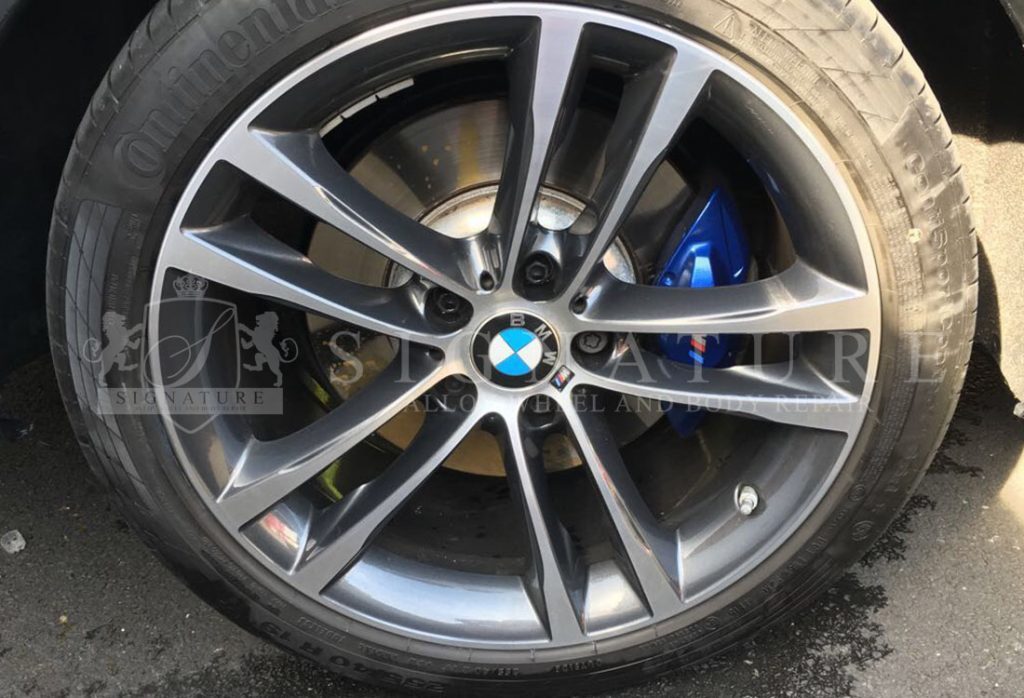
Diamond cut wheels look superb when new. That bright, mirror polished face with darker painted pockets behind it is what sets them apart from a standard alloy. It is also the reason they cannot simply be rubbed down and painted when they get damaged.
We have been trading since 2008 and we see a lot of diamond cut wheels come through our body shop in Radcliffe and on our mobile runs across the North West. Most owners do not actually know whether their wheels are diamond cut or not until something goes wrong. So let us walk you through it.
What actually makes a wheel diamond cut?
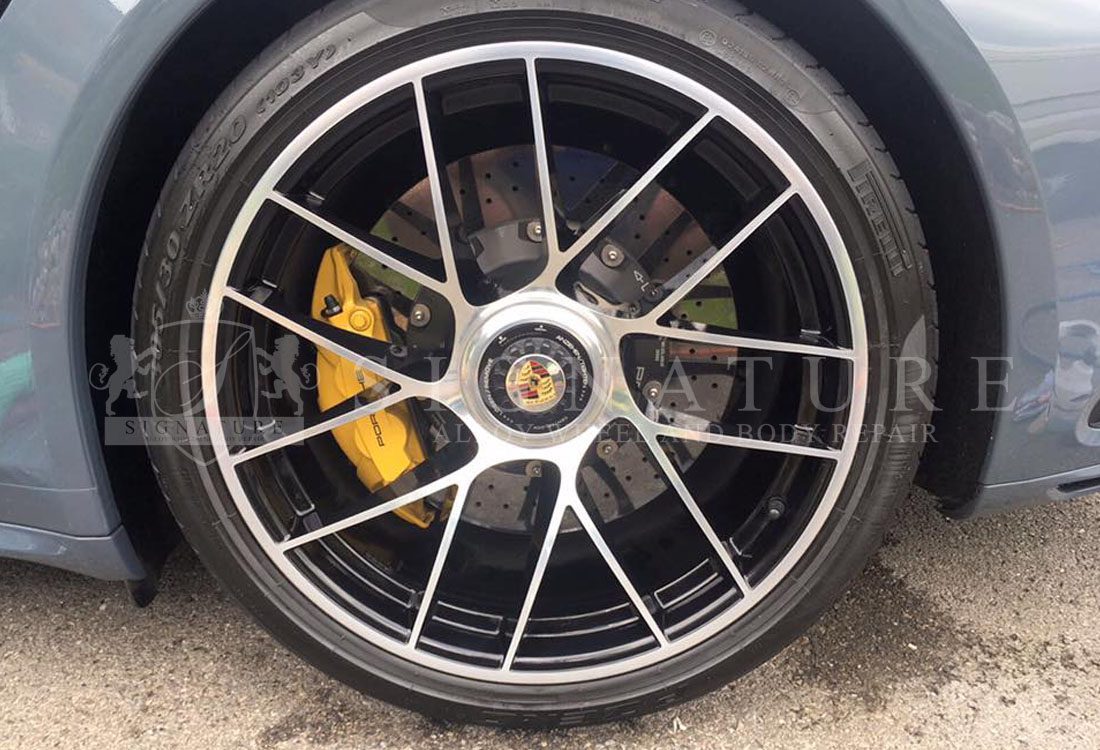
A diamond cut wheel is not painted on the face. It is machined. The bare aluminium face is skimmed by a cutting tool on a lathe, which leaves very fine concentric or straight lines in the metal. That machined surface is what catches the light and gives the wheel its shine.
Because bare aluminium oxidises, the face is then sealed with a clear lacquer. So the structure is simple: painted or powder coated pockets and spokes, a machined bare metal face, and a clear coat over the top.
That clear coat is the weak point. Stone chips, kerb scuffs and road salt all let moisture underneath, and once water gets between the lacquer and the aluminium, the corrosion spreads along the face. This is why diamond cut wheels often look white and milky, or like the shine has gone cloudy, rather than showing obvious scratches.
How can I tell if my wheels are diamond cut?
There are a few quick checks you can do at home before you enquire anywhere.
- Look at the face in daylight. If you can see fine machined lines radiating around the wheel, or a very uniform bright shine, it is likely diamond cut.
- Compare the face to the spokes. If the face is bright and bare while the spokes and inner areas are a different colour, that two tone look is a strong sign.
- Look for a lacquer edge. On many wheels you can see or feel a slight step where the clear coat ends and the painted area begins.
- Check for milky white patches. Corrosion under clear lacquer on a polished face is very common and very distinctive.
- Look at the centre caps or the handbook. Some wheels are marked from the factory, and a dealer can often confirm from the registration.
If you are still unsure, take a clear photo of the whole wheel and one close up of the face. We are happy to look and tell you what you are dealing with.
Why does painting over a diamond cut face look wrong?
Paint sits on top of the metal. It has its own texture, its own colour and its own level of gloss. A machined face has none of that. It reflects light in a tight, directional way that paint simply cannot copy, even with a very good silver.
The result is a wheel that looks flat. In dull light it might pass. In sunlight, or under forecourt lighting, the difference is obvious. The painted face looks softer and greyer than the machined spokes beside it.
There is a second problem. If corrosion has started under the lacquer, painting over it traps that corrosion underneath. It carries on creeping, and the new finish lifts or blisters from beneath. That is why a proper repair starts with removing the old finish and dealing with the metal, not covering it up.
How does a lathe refinish actually work?
A proper diamond cut refinish is a sequence, and every stage matters.
- Strip and inspect. The old lacquer and paint are removed so we can see the true condition of the wheel. Kerb damage, kerb rash and any buckling get assessed at this point.
- Repair the damage. Scuffs and gouges are built back up and dressed so the surface is sound. Badly damaged wheels may need welding or straightening before anything else.
- Refinish the painted areas. The spokes and pockets are prepped and finished in the correct colour, because these are done before the face is cut.
- Machine the face on the lathe. The wheel is mounted and the cutting tool skims the face, removing a very fine layer of aluminium to reveal fresh, bright metal with a uniform machined pattern. This is the step that paint cannot replace.
- Clean and lacquer. The machined face is cleaned and sealed with a clear coat to protect the bare metal.
It is worth knowing that diamond cutting produces fine metal swarf and needs a controlled environment. That is one of the reasons this work happens in our Radcliffe body shop rather than on a driveway. Our mobile service still covers a huge amount of cosmetic work at homes and workplaces across Greater Manchester, Lancashire, Cheshire, Merseyside and West Yorkshire, but anything that needs the booth or the lathe comes to the unit.
How many times can a diamond cut wheel be recut?
There is no fixed number, and anyone who gives you one without seeing the wheel is guessing. What matters is how much metal is left.
Each recut removes a thin layer from the face. The wheel manufacturer sets a minimum thickness for that face, and once you get close to it, the wheel should not be cut again. Some wheels have plenty of material and can be recut more than once over their life. Others are already close to the limit after a single skim, particularly wheels with a deep dish or a very pronounced machined lip.
A few honest points from us:
- A wheel that has been badly kerbed and previously repaired badly may have less material than you would expect.
- If a wheel is too thin to recut safely, the right answer is usually a full refurbish in a painted or powder coated finish, which does not remove any more metal.
- A wheel that is cracked, buckled or has heavy corrosion around the bead area needs proper inspection before anyone promises a finish.
We will always tell you if a wheel is not a sensible candidate for another cut, rather than push it through and hand back something that will not last.
What about kerb damage and white worm corrosion?
These are the two problems we see most on diamond cut wheels.
Kerb damage is exactly what it sounds like. The outer lip or face has been scuffed against a kerb, leaving gouges and a rough edge. If it is only the lip, it can often be dressed and machined. If the damage reaches into the spokes or the bead area, the repair plan changes.
White worm is the milky, thread-like corrosion that spreads under the clear lacquer on the machined face. It starts at a chip or scuff, then tracks along under the coating. You cannot polish it out permanently, because the corrosion is under the lacquer, not on top. It has to be stripped back and the face re-machined.
Does a diamond cut finish last as well as paint?
A machined face with a good clear coat will last well if it is looked after. The catch is that the clear coat over bare metal is more easily damaged than a full painted finish, and once water gets in, corrosion spreads quickly along that flat face.
A couple of practical habits help a lot. Wash the wheels regularly with a pH neutral cleaner rather than strong acid wheel cleaners, and keep on top of stone chips and scuffs while they are small. If you use a jet wash, keep it at a sensible distance from the lacquer edge.
Can this be done on my driveway?
Some of it can. Cosmetic wheel work, kerb scuffs on painted wheels and a range of SMART repairs are things our mobile team handles at homes and workplaces, and many SMART repairs are finished in around two hours. Our opening hours run Monday to Friday 09:00 to 20:00 and Saturday 09:00 to 16:00, and we are closed on Sunday.
A true diamond cut refinish needs the lathe and a controlled space, so that comes to our body shop at Unit C, The Yard, Rear of Constellation Mill, Radcliffe, M26 4AD. The same team works both sides, so you are not passed to a stranger halfway through.
Send us a photo and we will tell you straight
If you are not sure whether your wheels are diamond cut, or whether they can be recut, send us a few photos of the damage with your enquiry. A clear shot of the whole wheel and a close up of the worst area is usually enough for us to give you a useful answer.
Quotes are free and without obligation, we reply within 24 hours, and every repair carries a guarantee. Get in touch through the website and we will take a look.
Need this doing properly?
Signature repairs alloy wheels and bodywork across Greater Manchester and the North West, mobile at your home or workplace. Free quotes answered within 24 hours.