Car care
Best Car Wax UK: How to Choose and Our Top 5 Picks
Carnauba, synthetic or ceramic? A body shop guide to choosing a car wax that survives a British winter, how to apply it properly and five worth buying.
9 minute read By Signature Alloy Wheel & Body Repairs
In short
For most UK drivers a synthetic wax or hybrid sealant is the best choice, because it survives rain, road salt and regular washing for roughly three to six months. Carnauba gives a warmer, deeper shine but needs topping up more often. Apply either to clean, dry, cool paint in thin coats and buff off before it fully hardens.
A coat of wax does two jobs. It puts a thin sacrificial layer between your paint and everything a British winter throws at it, and it makes the colour look deeper and the reflections sharper. Both matter. Bird lime, tree sap, road salt and iron fallout from brake dust all etch lacquer if they sit on bare paint, and once the lacquer is etched the fix is machine polishing or a respray, not another bottle of wax.
The difference is obvious in the workshop. Cars that get washed and protected a few times a year arrive with paint that still polishes up, even at ten years old. Cars that have never had anything on them arrive with chalky, matt patches on the bonnet and roof where the lacquer has failed, and there is no product on any shelf that brings that back.
Does waxing a car actually do anything?
Yes, but not in the way most adverts suggest. Wax leaves a very thin hydrophobic film on top of the lacquer. That film does four useful things.
- It takes the hit first. Bird droppings, tree sap and industrial fallout are acidic or alkaline enough to bite into lacquer. On a waxed panel they usually sit on the wax layer instead, which buys you time to get them off.
- It sheds water. Rain beads and runs off rather than sitting in flat sheets, so the car dries faster and picks up fewer hard water spots.
- It makes the car easier to clean. Dirt keys into bare, slightly porous lacquer. On a waxed panel most of it comes off in the pre rinse, which means less contact with a wash mitt and fewer swirl marks over the life of the car.
- It slows UV damage. Most quality waxes include UV filters. British sun is not Californian sun, but red and dark blue solid colours still fade on horizontal panels over a decade.
What wax does not do is add any meaningful hardness. It is measured in microns and it will not stop a stone chip, a trolley or a kerb.
Carnauba, synthetic or ceramic: which type should you buy?
For most UK drivers a synthetic wax, sometimes sold as a paint sealant, is the sensible default because it lasts through several months of rain and salt without being reapplied.
| Type | What it is | Typical life | Strengths | Trade offs |
|---|---|---|---|---|
| Carnauba wax | Natural wax from the leaves of the Brazilian carnauba palm, blended with oils and solvents | 6 to 10 weeks | Warm, deep glow that flatters dark solid colours. Easy to apply and very easy to buff off | Softens in heat, breaks down quickly under salt and frequent washing, needs regular topping up |
| Synthetic wax or sealant | Man made polymers that bond to the lacquer as the carrier evaporates | 3 to 6 months | Durable, sharp glassy reflection, thin coats go a long way, tolerant of British weather | Slightly clinical looking on dark colours compared with carnauba |
| Hybrid wax | A blend of carnauba with synthetic polymers or SiO2 | 3 to 5 months | Middle ground: most of the warmth, most of the durability | Rarely the very best at either job |
| Ceramic coating | SiO2 based liquid that cures into a hard, semi permanent layer | 1 to 3 years | Far longer lasting, strong chemical resistance, very slick | Paint must be corrected and fully decontaminated first, mistakes are hard to undo, the toughest grades are trade only |
If you keep a car outside in Greater Manchester and wash it fortnightly, a synthetic or hybrid product is the practical answer. If you have a garaged weekend car in black or dark blue, carnauba is worth the extra effort for the way it looks.
What to look for when choosing a car wax
Judge a wax on how it behaves on your car in your conditions, not on the marketing on the bottle.
- Durability. Anything claiming less than about three months will need reapplying before winter is over. Manufacturer claims are made in ideal conditions, so assume real life gives you less.
- UV protection. Look for stated UV filters, particularly if the car lives on a driveway rather than in a garage.
- Water behaviour. Tight beading looks impressive, but sheeting (where water runs off in one film) actually dries the car faster. Either is a sign the coating is still working.
- Form. Paste waxes give the most control and last longest in the tin. Liquids are faster over a whole car. Sprays are best used as a top up between proper coats rather than as your only protection.
- Ease of removal. Some hard waxes are punishing to buff off in a cold garage in November. If you are working outdoors in the UK, pick something forgiving.
- Layering. Sealants generally accept a second coat after an hour or two, which improves both looks and life. Check whether the maker recommends it.
- Cost per application, not per tin. A paste wax that does thirty cars is better value than a cheap liquid that does five, even if the tin costs three times as much.
- Your paint colour. Carnauba flatters black, dark blue and deep red. Silver, white and metallics tend to look better with the sharper reflection a synthetic sealant gives.
Best car wax UK: our top five picks
These are five products that hold up well in UK conditions and are easy to buy here. Durability figures are what the makers claim and what owners typically report, and a wet, salty winter will shorten all of them.
| Rank | Product | Type | Claimed durability | Water repellency | Price band |
|---|---|---|---|---|---|
| 1 | Meguiar's Gold Class Carnauba Plus | Carnauba blend | Up to 6 months | Excellent | £££ |
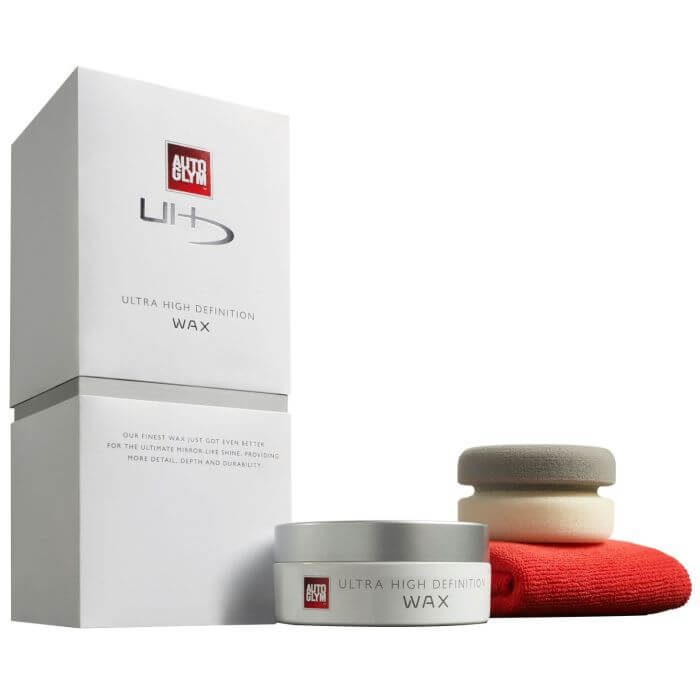
| 2 | Autoglym Ultra High Definition Wax | Synthetic paste | 3 to 4 months | Very good | ££ |
| 3 | Bilt Hamber DoubleSpeed Wax | Synthetic paste | 4 to 6 months | Excellent | ££££ |
| 4 | Collinite 476S Super DoubleCoat | Hard carnauba blend | 4 to 6 months | Excellent | ££££ |
| 5 | Gtechniq Crystal Serum Light | Ceramic coating | 2 years or more | Exceptional | £££££ |
1. Meguiar's Gold Class Carnauba Plus
The most forgiving product on this list and the easiest one to recommend to somebody waxing a car for the first time. It goes on thin, hazes predictably and wipes off without much effort, and it adds real depth to dark colours. It is sold everywhere from motor factors to supermarkets, which matters when you want to top up in a hurry.
2. Autoglym Ultra High Definition Wax
British made and aimed squarely at people who want a sharp, glassy finish rather than a warm one. The paste comes with its own applicator and microfibre, it is very economical because you need almost nothing on the pad, and it suits silver, white and metallic paint particularly well. Durability is at the shorter end of the synthetic range, so plan on topping up seasonally.
3. Bilt Hamber DoubleSpeed Wax
Another British product, and the most tolerant of poor working conditions of anything here. It can be applied to a damp car, which is genuinely useful in an English autumn, and it beads hard for months. It is a premium price for a small tin, but coverage per application is very good.
4. Collinite 476S Super DoubleCoat
An old fashioned, hard marine grade wax with a following among people who prepare cars for winter. It is stubborn to spread and stubborn to buff off, particularly in the cold, and the finish is more of an honest shine than a show gloss. What you get in return is durability that outlasts most soft waxes by a wide margin.
5. Gtechniq Crystal Serum Light
Not a wax at all. Crystal Serum Light is a consumer grade ceramic coating that cures into a hard layer measured in years rather than months, and it resists chemicals and washing far better than anything above. It is unforgiving of poor preparation: any swirls, etching or bonded contamination you seal in will stay sealed in. The stronger Crystal Serum Ultra grade is applied by approved detailers only.
How to apply car wax properly
Preparation is most of the job. Wax applied over dirt or bonded contamination will look patchy and will not last.
- Wash the car properly first. Two buckets, a soft mitt, wheels first, top down. Any grit left on the paint gets dragged around by the applicator pad.
- Decontaminate the paint. Use an iron fallout remover on the lower panels and a tar remover on the sills and behind the arches. If the paint still feels gritty through a plastic bag over your hand, clay it with plenty of lubricant.
- Dry it fully. Use a plush microfibre drying towel and get water out of the shuts, mirror housings and badge surrounds. Trapped water runs out later and streaks the fresh wax.
- Work in the shade on cool panels. Direct sun makes wax flash off before you can buff it, which leaves smears that are hard to shift. An overcast day or a garage is ideal.
- Use a thin coat. More wax does not mean more protection. A pea sized amount of paste on a foam or microfibre applicator covers half a bonnet. Overapplying wastes product and makes removal much harder.
- Do one panel at a time. Spread in straight overlapping passes rather than circles, then leave it to haze. Most products want a few minutes; check the label and test a corner with a fingertip.
- Buff with clean microfibre. Use one towel to lift the bulk and a second, completely clean one to finish. Turn or swap towels often, because a loaded towel just smears wax around.
- Let it cure. Give a sealant or coating at least a few hours, and ideally overnight in the dry, before it gets rained on or washed. Ceramic coatings usually want longer, so follow the maker's cure times.
Finish by wiping the door shuts, boot shut and around the fuel flap with a damp cloth to catch any residue that dries white.
How often should you wax your car in the UK?
Twice a year is the realistic minimum, timed around the salt season rather than the calendar.
| Product type | Suggested interval | Best timing |
|---|---|---|
| Carnauba wax | Every 6 to 10 weeks | Top up before and during winter |
| Synthetic wax or sealant | Every 3 to 4 months | September or October, then March or April |
| Hybrid wax | Every 3 to 5 months | Autumn and spring |
| Ceramic coating | Every 1 to 3 years | Any dry spell, with a maintenance topper twice a year |
The autumn coat is the important one. Grit lorries put salt down from around October, and salt held against paint and bare metal by winter grime is what starts corrosion around stone chips, arch lips and sills. A protected car sheds that far more easily and takes less scrubbing to clean, which in turn causes less wash damage.
What waxing will not fix
Wax hides very light marring for a few weeks and does nothing at all for real damage. Understanding the line saves you money on products that were never going to work.
- Swirl marks and light scratching need the lacquer levelling with a machine polisher and a cutting compound, not filling. Our machine polishing service removes them rather than masking them.
- Scratches you can catch a fingernail in have gone through the lacquer. They need wet flatting and refinishing, which is what a scuff and scratch repair covers.
- Stone chips are bare metal or primer showing through and will rust if they are left. Wax cannot bridge them.
- Failed or peeling lacquer on a roof or bonnet cannot be revived. Once the layer has broken down, the panel needs flatting back and respraying.
- Kerbed alloys are a separate job entirely, and no paint product touches them.
If you are unsure whether a mark will polish out or needs paint, send us a photo through the quick quote form and we will tell you honestly which it is.
Need this doing properly?
Signature repairs alloy wheels and bodywork across Greater Manchester and the North West, mobile at your home or workplace. Free quotes answered within 24 hours.