Car care
Best Car Polish in the UK: Six Products Worth Buying
Which car polish to buy in the UK, the difference between a compound and a finishing polish, and how to apply either without marking your paintwork.
11 minute read By Signature Alloy Wheel & Body Repairs
In short
The best car polish depends on how bad the paint is. Use a finishing polish such as Meguiar's Ultimate Polish or Autoglym Super Resin Polish for light swirls and gloss, and a compound such as 3M Perfect-It EX or Griot's Complete Compound when the defects are deeper. Follow either with a wax or sealant.
Car polish is one of the most misunderstood products in the detailing aisle, mostly because the word gets used for three different things. Some products in the polish section are abrasive and cut the paint. Some are purely protective and add nothing but shine. Some are both. Buying the wrong one is how people end up disappointed with an expensive bottle.
What is car polish, and how is it different from wax?
Car polish contains abrasives that remove a microscopically thin layer of clear coat, levelling out swirls, light scratches and oxidation. Wax adds a protective layer on top and removes nothing.
That distinction decides everything else. Polish is corrective: it works by taking material away, so it can only be done a limited number of times over a car's life before the clear coat runs thin. Wax and sealant are protective: they sit on top, wear away instead of the paint, and can be reapplied as often as you like.
There is a third category, the all in one or cleaner wax, which combines mild abrasives with protection in a single step. Convenient, but it does neither job as well as doing them separately.
| Product | What it does | Removes material | When to use it |
|---|---|---|---|
| Compound | Heavy cut, removes deeper defects | Yes, significantly | Badly swirled or oxidised paint |
| Polish | Light cut, refines and adds gloss | Yes, a little | Light swirls, dullness, after compounding |
| All in one | Mild cut plus protection | Yes, minimally | Quick tidy up on reasonable paint |
| Wax or sealant | Protection and gloss | No | After polishing, and regularly thereafter |
| Ceramic coating | Long term protection | No | Once, on properly prepared paint |
How do you choose the right car polish?
Match the product to the condition of your paint, not to the brand you recognise. Start with the least aggressive option that does the job.
Paint condition. Wash the car, dry it, and inspect it under a bright light. Fine circular scratches visible in sunlight are swirls, and a finishing polish will handle them. Paint that looks chalky and dead needs a compound first. If the paint already looks good, a wax alone is enough.
Paint type. Almost every car built in the last thirty years has a clear coat over the colour, and clear coat is what you are polishing. Older single stage paint, where the colour is the top layer, transfers pigment onto your pad as you work and needs a gentler approach. Some manufacturers use notably hard clear coats, which need more cut, and others use soft ones that mark easily and finish down quickly.
Hand or machine. Anything you apply by hand will be gentle by definition, because you cannot generate the pressure or speed a machine can. If you have a dual action polisher, you can use more aggressive products with confidence.
How long you want it to last. A polish on its own gives you gloss with no durability. Whatever you use, plan to put wax, sealant or a coating on top afterwards.
Which car polishes are worth buying in the UK?
These six cover the range from light finishing work to serious correction, and all are readily available from UK retailers.
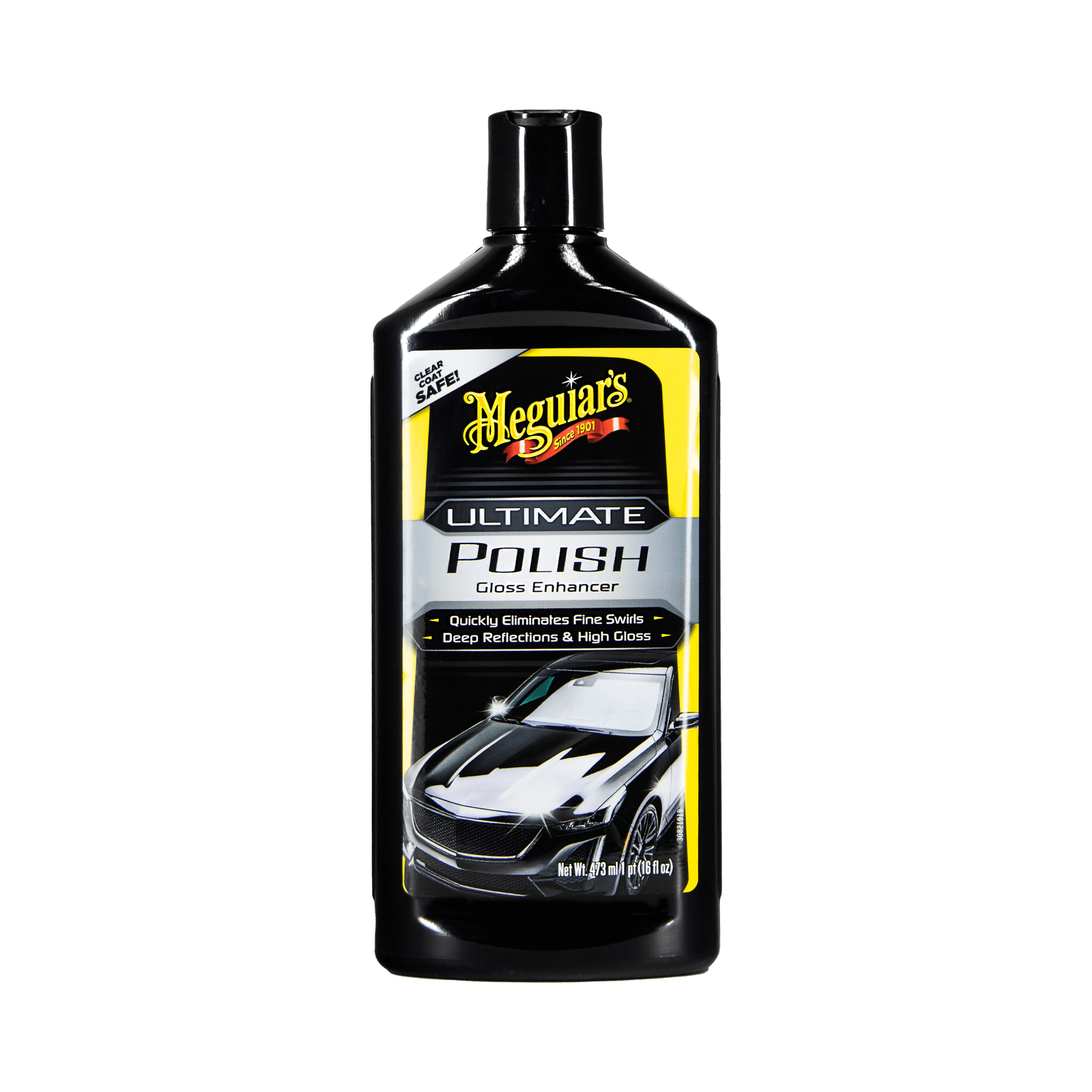
1. Meguiar's Ultimate Polish
A non abrasive to very lightly abrasive finishing polish designed to add depth and gloss rather than to correct heavy defects. It is forgiving, works by hand or machine, wipes off easily, and it is a sensible first bottle if you have never polished a car. Use it on paint that is already in reasonable condition, or as the refining step after a compound.
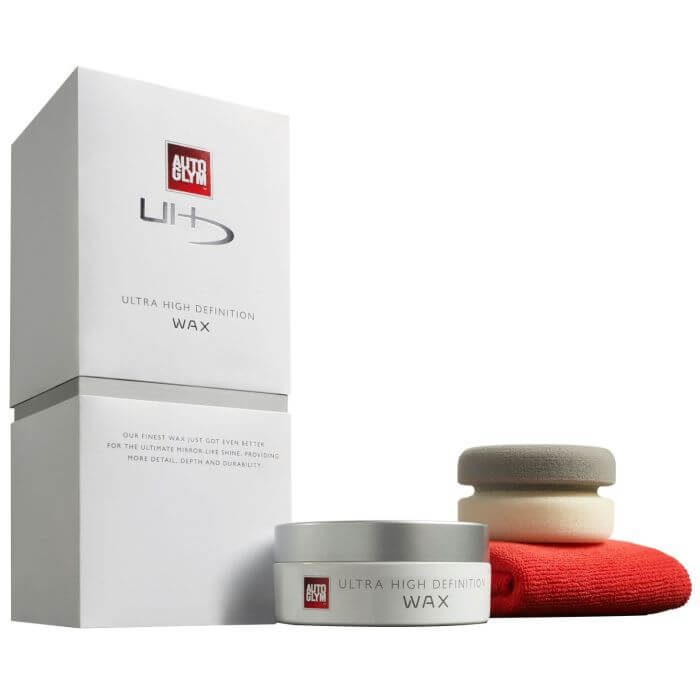
2. Autoglym Super Resin Polish
The long standing British favourite, and probably the most widely owned car polish in the country. It combines mild abrasives with fillers and a small amount of protection, so it cleans up light marks, hides what it cannot remove, and leaves a glossy finish in one step. That filler content divides opinion among detailers, but for an owner who wants a good looking car without a full correction it does exactly what most people want.
3. Chemical Guys VSS Scratch and Swirl Remover
A hybrid product that combines a light cutting polish with a sealant. It is aimed at removing swirls and light scratches while leaving some protection behind, which makes it useful when you want one product and one afternoon rather than a multi stage process. Works by hand or with a dual action machine.
4. Gtechniq Crystal Serum Ultra
Worth knowing about, but not a polish. Crystal Serum Ultra is a ceramic coating, applied after correction, and it is sold for professional application only, so you need an accredited detailer to fit it. Gtechniq's Crystal Serum Light is the version available to buy and apply yourself. Either way, a coating goes on last, over paint that has already been polished, because it locks in whatever is underneath it.
5. 3M Perfect-It EX Compound
A professional grade compound used in body shops, designed to remove sanding marks and deeper defects and still finish down cleanly rather than leaving haze behind. It is more product than most owners need, and it is intended for machine use, but if you are tackling genuinely neglected paint it will do work the softer polishes cannot.
6. Griot's Garage Complete Compound
Sits between a compound and a polish, with enough cut for light to moderate defects and enough refining ability to finish without needing a separate polishing stage on many paints. That makes it a practical one bottle choice for a car that needs real correction but not a full multi stage job. Machine use gets the most from it.
Which one should you actually buy?
| Your situation | Sensible choice |
|---|---|
| Paint is good, you want more gloss | Meguiar's Ultimate Polish |
| Light swirls, want one product and a good result | Autoglym Super Resin Polish |
| Swirls plus some protection, single stage job | Chemical Guys VSS |
| Moderate swirls, you own a machine polisher | Griot's Complete Compound |
| Neglected or oxidised paint, machine work | 3M Perfect-It EX Compound |
| Corrected paint, want long term protection | Gtechniq Crystal Serum Light, or Ultra through a detailer |
What do you need before you start?
Polishing without the right supporting kit is where most home attempts go wrong.
- A clean, decontaminated car. Wash it, then clay bar it or use a chemical fallout remover. Polishing over bonded contamination drags grit across the paint
- Plenty of clean microfibre cloths. More than you think. A cloth loaded with spent polish stops working and starts marking
- Applicator pads for hand work, or foam pads in at least two grades for a machine
- Masking tape for plastic trim, badges and rubber seals, which stain white with polish residue and are difficult to clean
- Good lighting. A bright inspection lamp shows defects that daylight hides
- Shade and a cool panel. Never polish in direct sun
How do you apply car polish by hand?
Work one panel at a time, use very little product, and let the abrasives do the work rather than pressing hard.
- Wash and dry the car completely. Any grit left on the paint will be dragged around by the pad
- Decontaminate with a clay bar or fallout remover so the surface is genuinely smooth
- Mask off trim, badges and rubber seals
- Apply a small amount of polish to the pad, not the panel. A pea sized blob covers about half a bonnet
- Spread it over a section roughly two feet square, then work it in with moderate pressure in straight overlapping passes
- Keep working until the product goes clear or nearly clear. Stopping early means the abrasives have not finished breaking down and you will leave haze
- Buff off with a clean microfibre, turning to a fresh face regularly
- Inspect under a light before moving on, and repeat the section if marks remain
- Protect immediately afterwards with wax, sealant or a coating
Straight line passes rather than circles. Circular marks catch the light from every angle, so they are far more visible than straight ones if you do inflict any.
How do you polish with a machine?
A dual action polisher does in an hour what takes a full day by hand, and it is much safer for a beginner than a rotary.
The basic method:
- Test on a small area first, using the least aggressive pad and product combination. Only step up if it is not clearing the defects
- Prime the pad with a few dots of product and spread it at the lowest speed before switching on properly
- Work at moderate speed with light pressure, keeping the pad flat on the panel
- Move slowly, around an inch per second, in overlapping passes across and then up and down the section
- Keep the pad clean. Brush spent product out of the foam between sections, and swap to a fresh pad regularly
- Do not linger on edges and body lines, where the clear coat is thinnest and heat builds fastest
- Wipe the panel with a panel wipe or diluted isopropyl alcohol before assessing, because polish oils hide the defects you are trying to see
If you are new to machine polishing, start on a boot lid or a rear door rather than the bonnet. It is a forgiving place to learn.
What should you do after polishing?
Protect the paint straight away, then maintain it, because polished clear coat with nothing on top is the most exposed your paint will ever be.
The order of work is always the same: correct, protect, maintain. Once the polishing is finished, wipe the panels down with a panel wipe or diluted isopropyl alcohol to strip any remaining polishing oils, so the protection bonds to bare clear coat rather than to a film of leftover product. Then apply one of:
- A carnauba wax for a warm finish that suits dark colours, reapplied every couple of months
- A synthetic sealant for longer durability with less frequent reapplication
- A ceramic coating if you want to prepare the paint once and maintain it for a year or more
Keeping the result afterwards comes down to washing habits rather than more polish. Wash every fortnight using two buckets and a pH neutral shampoo, dry with clean microfibre rather than letting the car air dry, and remove bird droppings and sap the day you notice them. Top up the protection when rain stops beading and starts sheeting flat across the panel.
Done that way, a car needs polishing roughly once a year, not every few months. That matters, because every polish takes a little more clear coat and the supply is not infinite.
What mistakes ruin a polishing job?
Most poor results come from a small number of avoidable errors.
- Too much product. More polish does not cut more. It just makes a mess and takes longer to remove
- Working in the sun. The product flashes off before the abrasives have broken down
- Not decontaminating first. Bonded fallout under a pad is exactly the same as sandpaper
- Reaching for the strongest compound first. Always start with the least aggressive combination
- Dirty pads and cloths. A dropped microfibre picks up grit from the floor and puts it straight into your paint
- Polishing the same panel every few weeks. The clear coat does not grow back
- Forgetting to protect afterwards. Bare polished clear coat dulls quickly
If you would rather not take a machine to your own paint, our mobile machine polishing service covers Greater Manchester and the surrounding counties, working at your home or workplace.
When will polishing not fix the problem?
Polish only works within the clear coat, so anything that has broken through it needs paint rather than abrasives.
The fingernail test is reliable. Run a nail lightly across the mark. If it glides over, the damage is in the clear coat and can probably be polished out. If the nail catches, the scratch has gone through and no amount of polishing will remove it, because the material you would need to remove is deeper than the clear coat that remains.
Polish will not help with:
- Scratches you can feel with a fingernail
- Stone chips, which are missing paint rather than damaged paint
- Anything showing primer, a different colour underneath, or bare metal
- Etching from bird droppings that has gone deep enough to dish the surface
- Peeling or flaking lacquer, which needs the panel preparing and refinishing
For those, a localised repair is usually a better answer than a full respray. A scratch and scuff repair treats the damaged area and blends the new paint into the surrounding panel, so the rest of the factory finish stays as it is. Smaller marks on bumpers, doors and wings often fall within the scope of a mobile smart repair, done at your home or workplace in a few hours.
Good polish, applied properly, will make a well kept car look considerably better than it does now. It is not a substitute for repair, and it is not something to do every month, but as an annual reset it earns its place in the cupboard.
Need this doing properly?
Signature repairs alloy wheels and bodywork across Greater Manchester and the North West, mobile at your home or workplace. Free quotes answered within 24 hours.