Car care
How to Protect Car Paint: Washing, Waxing and Coatings
Safe washing, the difference between wax, sealant and ceramic coating, and how to deal with stone chips before they turn into rust under your paintwork.
10 minute read By Signature Alloy Wheel & Body Repairs
In short
Protect car paint by washing it correctly with two buckets and a pH neutral shampoo, drying it with clean microfibre, and keeping a layer of wax, sealant or ceramic coating on top. Remove bird droppings and sap immediately, and repair stone chips before moisture reaches the steel underneath.
Car paint is thinner than most people imagine. The clear coat that does all the protecting is a fraction of the thickness of a human hair, and once it has gone, everything underneath is exposed. Almost every paint problem we see in the body shop traces back to that layer being damaged, worn through or never protected in the first place.
Keeping paint in good condition is not complicated, but it does depend on doing a small number of things properly and consistently.
Why does car paint need protecting?
Paint is the barrier between the steel of your car and everything the British climate throws at it, and it degrades if it is not maintained.
Modern paint is built in layers: primer for adhesion and corrosion resistance, base coat for colour, and clear coat on top for gloss and protection. The clear coat takes all the punishment from UV light, acidic rain, bird droppings, tree sap, road salt, brake dust and grit. Once it is thinned by oxidation or cut through by a stone, the colour coat fades and moisture reaches the metal.
The consequences are practical rather than cosmetic. Faded or blistered paint knocks a noticeable amount off resale value, rust spreads underneath sound paint long before you can see it, and a small repair caught early costs a fraction of a panel that has been left.
How should you wash a car without scratching it?
Most swirl marks are put into paint during washing, so the method matters far more than the products.
The safe sequence:
- Rinse thoroughly first. Every bit of grit you can flush off before touching the car is grit that cannot be dragged across the paint. A pressure washer used sensibly, or just a hose, is fine
- Use two buckets. One with shampoo, one with plain rinse water, and a grit guard in the bottom of each. Wash a section, rinse the mitt in the rinse bucket, then reload with shampoo
- Use a pH neutral car shampoo. Not washing up liquid, which strips wax
- Use a microfibre wash mitt, not a sponge. Sponges trap grit against the paint
- Work top down. The lower panels are always the dirtiest, so leave them until last
- Straight lines, not circles. Straight strokes make any marks you do inflict far less visible
- Do the wheels separately with their own bucket, mitt and brushes. Brake dust is abrasive and you do not want it anywhere near the paint
- Rinse and dry properly. Air drying leaves water spots, and mineral deposits from hard water etch into the clear coat over time
For drying, use a large plush microfibre drying towel and pat or draw it across the surface rather than rubbing. A dedicated car dryer or a leaf blower works well for wing mirrors, grilles and badges where water hides and then runs out later.
Wash in the shade if you can. Washing in direct sun means shampoo and water drying on the panel before you can rinse it, which leaves marks.
What is the difference between wax, sealant and ceramic coating?
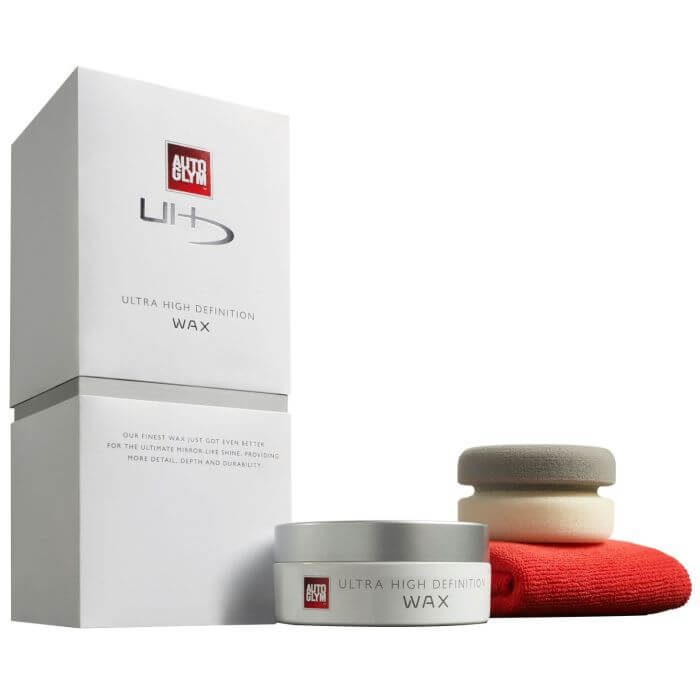
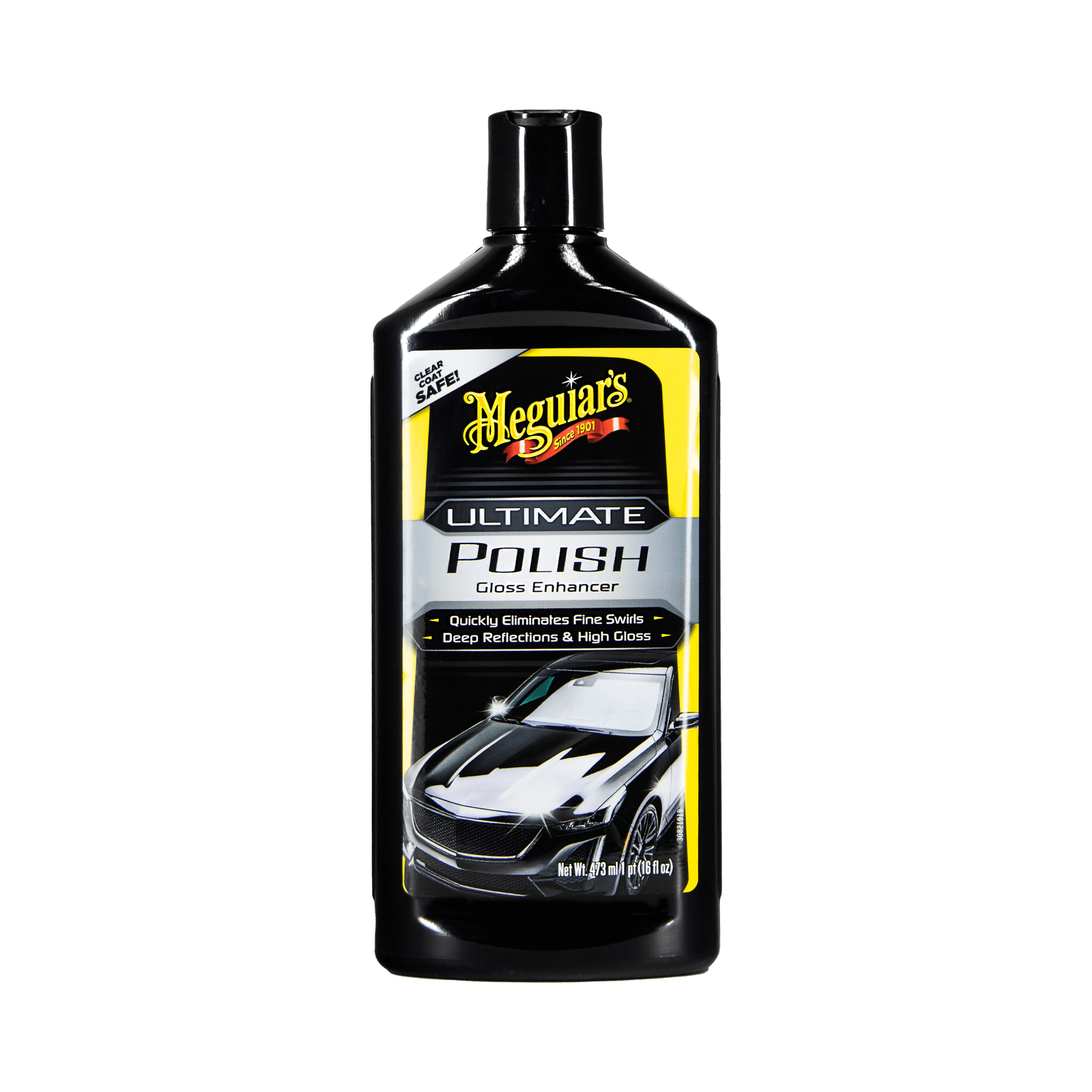
They all put a sacrificial layer between the environment and your clear coat, but they differ in chemistry, durability and how much work they take to apply.
| Carnauba wax | Synthetic sealant | Ceramic coating | |
|---|---|---|---|
| What it is | Natural wax from the carnauba palm | Man made polymer | Silica based coating that cures hard on the paint |
| Typical durability | A few months | Around six months | A year or several, depending on product and prep |
| Look | Warm, deep glow, particularly on dark colours | Sharp, glassy, reflective | Very glossy, strong water beading |
| Ease of application | Easiest. On, haze, off | Easy | Demanding. Paint must be decontaminated and usually machine polished first |
| Chemical resistance | Modest | Better | Best of the three |
| Best for | Enthusiasts who enjoy the process and like the finish | Most drivers wanting protection with little effort | People keeping a car long term who want to prepare once and maintain |
Wax and sealant can be applied on any dry afternoon with nothing more than an applicator pad and a microfibre cloth. Ceramic coatings are less forgiving: they bond permanently to whatever is on the paint at the time, so any swirls or contamination get locked in underneath. That is why professional application usually involves a full decontamination and a machine polish first, and why the preparation costs more than the coating itself.
How do you protect car paint from UV damage?
UV light breaks down the resins in clear coat and fades pigment, and the fix is a combination of shade and a protective layer.
- Park in shade or under cover where you can. Consistently parking in the same sunny spot is what produces the classic faded bonnet and roof with good doors
- Use a car cover for long term outdoor parking, but only a breathable one on a clean car. A dirty car under a cover means grit rubbing against paint every time the wind moves
- Keep a protective layer on the paint. Most waxes and sealants include UV inhibitors, and the layer itself absorbs some of the exposure
- Pay particular attention to horizontal panels. The roof, bonnet and boot lid take far more UV than the doors, and they are the panels people wax least thoroughly
Red and other bright solid colours fade fastest because their pigments are least UV stable. Metallics and dark colours show swirls more but hold colour better.
How do you deal with bird droppings and tree sap?
Remove them immediately, because both are acidic and both etch into clear coat within hours in warm weather.
Bird droppings are the worst offender. They combine acid with grit, and the damage is done by the acid eating into the clear coat while the deposit sits there baking in the sun. What is left behind is a dull, slightly dished mark that will not wash off, because the surface itself has been eaten away.
Removal technique matters:
- Soak the deposit with a quick detailer spray or plain water and let it soften for a minute
- Lay a damp microfibre cloth over it and lift, rather than wiping
- Never scrub a dry deposit. The grit in it will scratch the paint
- Keep a small bottle of detailer and a couple of microfibre cloths in the boot for exactly this
Tree sap is stickier and often needs a dedicated tar and glue remover, applied to a cloth rather than sprayed onto the panel. Etching that has already happened can often be polished out if it is shallow, which is one of the jobs machine polishing handles well.
What causes swirl marks and how do you avoid them?
Swirl marks are thousands of fine scratches in the clear coat, and they are almost entirely caused by contact: washing, drying, and wiping dust off a dry car.
The things that cause them:
- Sponges and old cloths that trap grit
- One bucket washing, which puts the grit straight back on the paint
- Automatic car washes with rotating brushes
- Wiping a dusty car with a dry cloth, which is the single fastest way to swirl a bonnet
- Drying with a bath towel or chamois that has been dropped on the floor
- Circular washing motions, which make the marks catch the light from every angle
Swirls are not permanent. A machine polish removes a few microns of clear coat and levels the surface, restoring gloss. It is corrective work rather than routine maintenance, though, because the clear coat is finite and can only be polished a limited number of times over a car's life. Prevent them and you never need to.
Is an automatic car wash bad for paint?
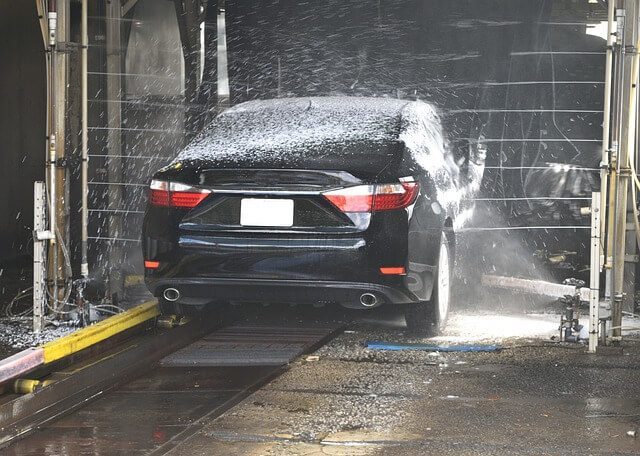
Brush based automatic washes are the most common cause of swirl marks on otherwise well kept cars.
The problem is not the machine but what is on the brushes. They wash every car that came before yours, including the one covered in gritty road film, and that abrasive material is dragged across your paint at speed. Touchless washes avoid the contact but rely on strong chemicals that strip wax and sealant, so paint ends up clean but unprotected.
Hand washing with the two bucket method is the safest option. If you use a wash regularly for convenience, a touchless one is the lesser of the two evils, and reapply your protection more often.
How do you stop stone chips turning into rust?
Seal the chip before moisture reaches the steel, and deal with it as soon as you notice it rather than at the next service.
Motorway driving throws grit at the leading edges of the car, so chips concentrate on the bonnet, front bumper, wing mirrors and the sills behind the front wheels. A chip that has only gone through the clear coat is cosmetic. A chip that has gone through to the primer or bare metal is a corrosion site.
The signs to look for on a chip you already have:
- A brown or orange tinge in the bottom of the chip
- Paint lifting or blistering at the edges
- A rough feel when you run a fingernail across it
Touch up paint is genuinely useful for small chips if it is applied properly: clean the chip, apply thin layers with a fine brush rather than one thick blob, let each dry, and finish level. It is not a solution for larger areas or for scratches longer than a couple of centimetres, where the result usually looks worse than the damage. For those, a stone chip repair blends new paint into the existing panel and leaves no visible boundary.
Is paint protection film worth it?
Paint protection film is worth considering on the impact areas of a car you intend to keep, because it takes the stone damage instead of the paint.
It is a clear urethane film applied to the front bumper, bonnet leading edge, wing mirrors and sometimes the sills and door edges. Modern films self heal minor marks with heat and can be removed later without damaging the paint underneath, provided they are professionally fitted and not left far beyond their service life.
The trade offs are cost and the visible edge where the film ends, unless it is wrapped around the panel edges. Full bonnet coverage costs considerably more than a partial front end, and for most drivers the front bumper and bonnet leading edge give the best return.
What if the paint is already damaged?
Damage that has already happened falls into three groups, and the right fix depends on how deep it goes.
- Marks in the clear coat only. Swirls, light scratches and water spotting. A machine polish removes them
- Through the clear coat into the colour. Your fingernail catches in the scratch. It needs paint, not polish
- Through to primer or metal. Needs filling, priming, colour and lacquer, and it needs doing before it corrodes
Small localised damage does not need a whole panel resprayed. A scratch and scuff repair treats the damaged area and blends the new paint into the surrounding panel, which is faster, cheaper and keeps the original factory paint on the rest of the car.
A year round paint protection routine
Consistency beats intensity. A car washed properly every fortnight will look better than one detailed twice a year and neglected in between.
| Frequency | Task |
|---|---|
| As it happens | Remove bird droppings, sap and fuel spills straight away |
| Fortnightly | Two bucket wash, dry with clean microfibre |
| Monthly | Walk round and check for fresh chips and scratches |
| Every two to three months | Reapply wax, or sealant twice a year |
| Twice a year | Decontaminate with a clay bar or chemical fallout remover before waxing |
| Annually | Assess whether the paint needs correcting, and deal with any chips before winter |
| Through winter | Wash more often to keep salt off, paying attention to sills and arches |
The single highest value habit is the monthly walk round. Most of the expensive bodywork we see started as something small that nobody noticed for a year.
Need this doing properly?
Signature repairs alloy wheels and bodywork across Greater Manchester and the North West, mobile at your home or workplace. Free quotes answered within 24 hours.