Bodywork & paint
Car Panel Repair Explained: Methods, Costs and Timings
How car panel repair works, when a panel can be saved and when it needs replacing, what drives the price, and how long a proper repair takes at a body shop.
11 minute read By Signature Alloy Wheel & Body Repairs
In short
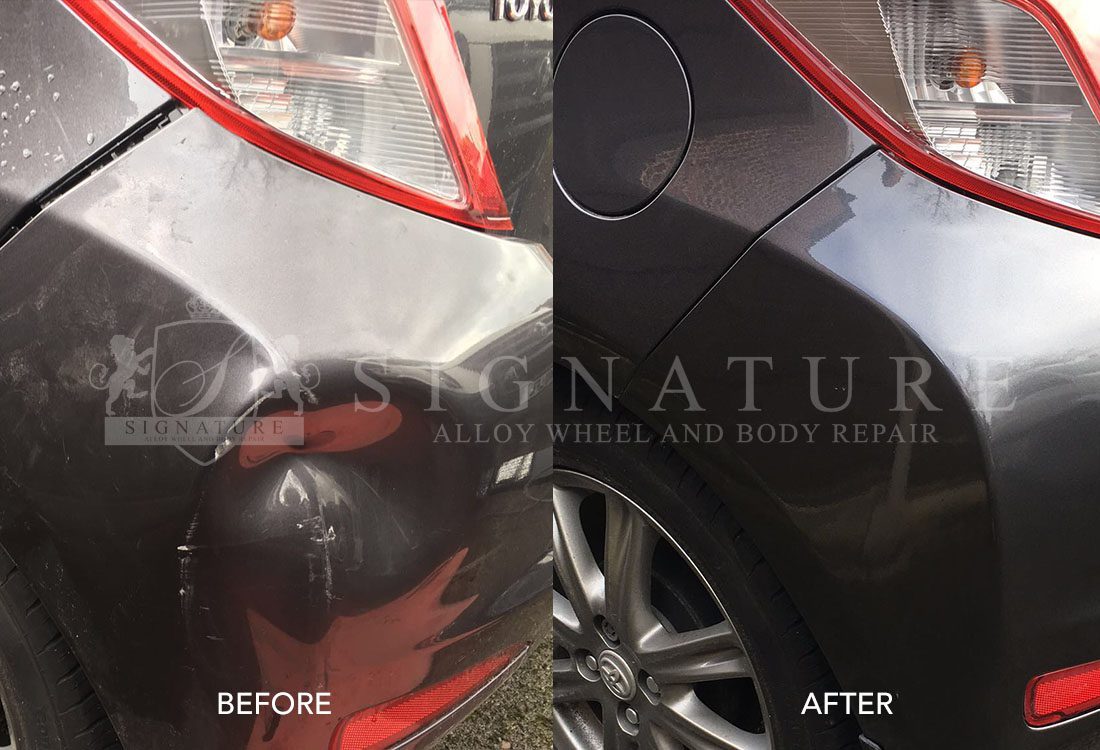
Car panel repair restores a damaged wing, door, bonnet or bumper to its original shape and finish rather than replacing it. The panel is assessed, dents are worked out or filled, the surface is primed and blocked, colour is matched and sprayed, then flatted and polished. Most single panel repairs take one to three days.
Car panel repair is the process of returning a damaged wing, door, bonnet, boot lid or bumper to its correct shape and finish instead of replacing it. Done properly, the panel is straightened, the surface is rebuilt, the colour is matched to your car rather than to a paint chart, and the finish is blended into the neighbouring panels so there is nothing to see.
Whether a panel can be repaired, and what that costs, depends on what has happened to it. This guide covers the damage types, the repair or replace decision, the actual process step by step, and what genuinely affects the bill.
What types of panel damage can be repaired?
Most of what a body shop sees falls into six categories, and each one is handled differently.
| Damage | What it is | Usual repair route |
|---|---|---|
| Scuffs and scratches | Marks in the lacquer or colour from contact, keys or brushing a hedge or wall | Machine polish if it is lacquer only, localised smart repair if it has broken the colour |
| Dents and door dings | Deformation with the paint still intact | Paintless dent removal, working the metal from behind |
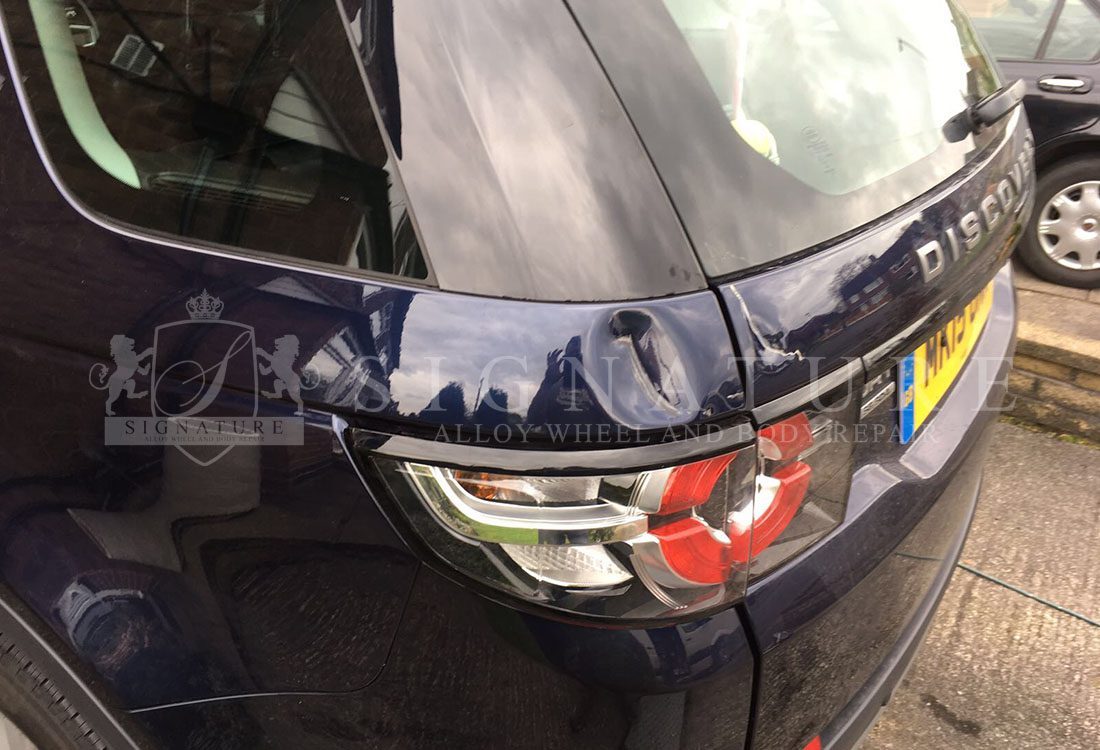
| Creases and impact damage | Deformation with stretched metal and cracked paint | Panel beating, filler, primer and full refinish |
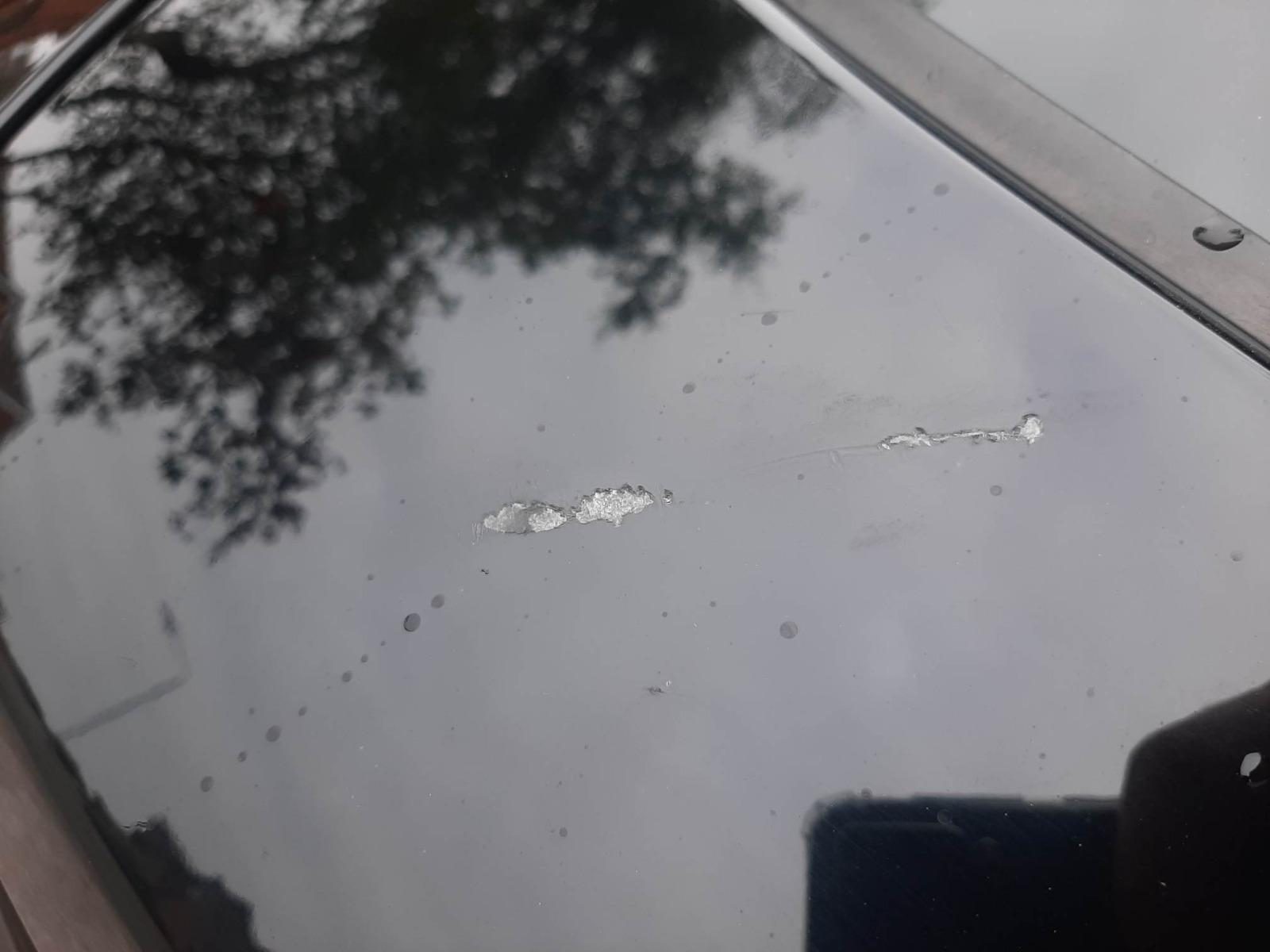
| Stone chips | Small points of impact damage on leading edges | Chip repair or a front end refinish where they are widespread |
| Corrosion | Rust starting from a chip, a stone strike or an unsealed edge | Cut back to sound metal, treat, repair and refinish |
| Cracked or split plastic | Bumpers, arch liners and skirts that have flexed or torn | Plastic welding and filling, or replacement if the mounting points are gone |
Two things decide almost everything. First, has the paint been broken. If the lacquer and colour are intact, the panel can often be sorted without spraying. Second, has the metal been stretched. Stretched metal will not go back to its original shape by itself, so it has to be worked, shrunk or filled.
Should a damaged panel be repaired or replaced?
Repair is the default, and replacement is the exception. A repair keeps the original factory corrosion protection and the original paint on the parts that were not damaged, and it is normally cheaper because the labour to straighten a panel is less than the cost of a new part plus its own preparation and paint.
Replacement becomes the right call when:
- The metal is torn, split, or creased so severely that straightening would take more hours than the panel costs.
- Corrosion has gone through, particularly along a bottom edge or an arch lip.
- The damage sits on a swage line or a body crease that will not read correctly after filling.
- The panel is bonded or structural, and the manufacturer's method specifies replacement.
- The panel is aluminium and has work hardened, which limits how far it can be reshaped.
- The damage takes in mounting points for lights, sensors or the bumper.
Modern bumpers add a complication. Parking sensors, radar units and cameras are frequently mounted in or behind them, and anything that affects a driver assistance sensor may need calibration afterwards. That is worth raising when you get a quote, because it changes both the cost and the time.
How the car panel repair process works
The order matters. Skipping stages is what produces repairs that look fine in the car park and obvious in daylight six months later.
- Assessment. The panel is inspected in good light and by hand. Body shops feel for damage as much as look for it, because a flat palm finds ripples and edges the eye misses. Paint depth is often measured too, which reveals previous repairs and how much material there is to work with.
- Strip down. Trim, handles, lights, badges and rubbing strips come off around the repair area. Removing them takes time but avoids masking lines and overspray.
- Metal work. Dents are worked out with rods from behind where access allows, or pulled from the face with a stud welder and slide hammer where it does not. High spots are knocked down, stretched areas are shrunk, and the panel is brought back to the correct profile.
- Filling and shaping. A thin skim of filler evens out what the metal work cannot. The key word is thin. Filler is a levelling material, not a substitute for straightening. It is then block sanded, not hand sanded, so the panel stays flat rather than following the shape of somebody's fingers.
- Priming. Primer is applied, cured, then block sanded again. Bare metal gets an etch or epoxy primer first so nothing lifts later.
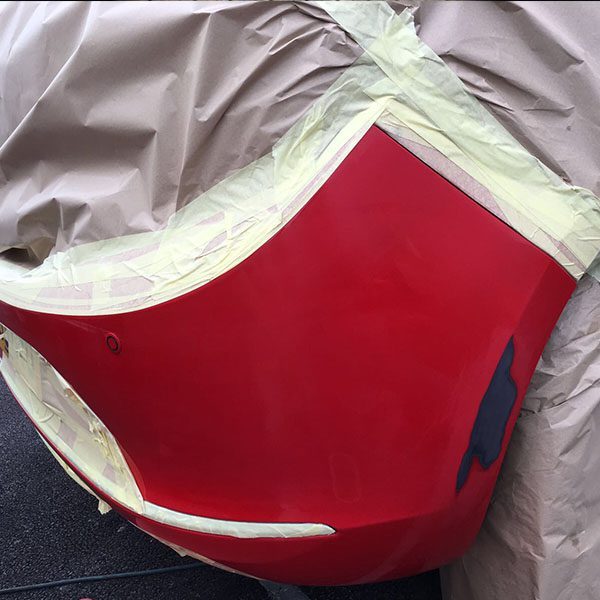
- Colour matching. The paint code is read from the vehicle plate, then the correct variant for that code is identified, because manufacturers run several shades under one code. The mix is sprayed onto a test card and checked against the car in daylight before anything goes on the panel.
- Base coat and blend. Colour is applied in thin coats and faded out into the adjacent panel so there is no hard edge where old meets new. Blending is what makes a repair invisible on metallics and pearls.
- Lacquer. Clear coat goes over the base for gloss and UV protection, taken to a natural break line such as a shut or a body crease.
- Bake and cure. The booth is brought up to temperature to harden the finish.
- Flat and polish. Any texture or dust nibs are flatted by hand and machine polished back to match the factory gloss level.
- Reassembly and check. Trim goes back on, panel gaps are checked, and the whole area is inspected under different lighting.
Our vehicle body repair service follows this sequence at the workshop in Radcliffe, and a shortened version of it for localised work done mobile at your home or workplace.
Smart repair or full panel refinish?
Both have their place, and a shop that only offers one will steer you towards it.
| Smart repair | Full panel refinish | |
|---|---|---|
| Best for | Bumper scuffs, small scratches, single dents, kerbed alloys, localised chips | Damage across a panel, deep creases, corrosion, several marks on one panel |
| Area treated | The damaged section only, blended out | The whole panel, blended into neighbours |
| Time | A few hours | One to three days |
| Cost | Lower | Higher |
| Where | Can be done mobile at your home or workplace | Body shop, usually a booth |
| Limits | Not suitable across a body line or where damage covers a large area | None, but it is more work than small damage justifies |
The judgement call is whether the damage sits within one area of a panel or spans it. A scuff on a bumper corner is a smart repair. Three separate marks along a door and a dent in the middle of it is a panel refinish, because you would otherwise be paying for three localised repairs that still leave visible differences between them. Our dent repair service covers the paintless side of this where the finish is unbroken.
What affects the cost of a car panel repair?
| Factor | Why it matters |
|---|---|
| Extent of damage | The hours needed to bring the panel back to shape are the largest single variable |
| Panel type | Plastic bumpers, steel wings and aluminium bonnets all behave differently and need different methods |
| Paint finish | Solid colours are the easiest to match. Metallics, pearls and three stage finishes need more coats and more careful blending |
| Colour matching difficulty | Silvers, whites and reds are notoriously variant heavy, and faded paint on an older car takes longer to match |
| Access | Panels with no access behind them rule out paintless methods and force a refinish |
| Sensors and electronics | Parking sensors, cameras and radar behind a bumper add removal, refitting and sometimes calibration |
| Number of panels | Blending into adjoining panels is normal practice, and adjacent panels add material and time |
| Parts, if replacing | Genuine, aftermarket and used panels vary widely, and each still needs preparing and painting |
One thing consistently reduces cost: dealing with damage early. A fresh stone chip is a few minutes of work. The same chip after two Manchester winters has rust under the edges, which means cutting back to bare metal, treating it and refinishing a section of panel.
How long will my car be off the road?
- Machine polish or localised scuff repair: a few hours, often the same day, and possible at your home or workplace.
- Paintless dent removal: typically one to three hours per dent depending on access.
- Single panel refinish: one to three days, driven by cure times as much as by labour.
- Panel replacement: usually longer, because the part has to arrive, be prepared and be painted before fitting.
- Multiple panel collision damage: a week or more, and longer if parts are on back order.
Ask the shop for a realistic date rather than a best case, and ask whether the quoted time includes the cure and polish stages or stops at the spray booth.
Does panel damage affect resale or lease return value?
Yes, and more than the cost of fixing it. A buyer looking at a scuffed bumper and a kerbed wheel does not price the repair, they assume the car has been treated carelessly generally and negotiate accordingly. Trade valuations work the same way, with a standard deduction applied for each cosmetic item.
On a leased or PCP vehicle it is more concrete. Damage is assessed against the fair wear and tear standard in your agreement, and anything outside tolerance is recharged at the funder's rates plus an administration margin, which normally exceeds what an independent body shop would charge for the same work.
Rust is the case where delay genuinely costs you money. Once corrosion is under the paint edge it keeps spreading, and a chip repair turns into a panel repair turns into panel replacement.
Is panel repair covered by insurance?
It depends on the policy and how the damage happened. Comprehensive cover normally includes accidental damage to your own vehicle, third party and third party fire and theft do not. Vandalism and malicious damage are usually covered under comprehensive but often still count as a claim.
Before you claim, weigh three things:
- Your excess. Compulsory and voluntary excess combined is often close to the cost of a single panel repair.
- Your no claims discount. Losing it, or stepping it back, can cost more over the following renewals than the repair itself.
- The disclosure requirement. Most policies require you to declare damage even if you do not claim for it.
For a single cosmetic panel, paying directly is frequently the cheaper route overall. For collision damage across several panels, anything involving a third party, or anything that might be structural, use the policy.
What to check when you collect the repaired car
Inspect the work before you drive away, in daylight and with the car dry. A shop that has done the job properly will expect you to look.
- Stand back and look down the side of the car at a shallow angle, with a reflection running along the panel. Ripples, high spots and sunken filler show up in the reflection long before they show up head on.
- Check the colour in daylight, not under the workshop lights. Look at the repaired panel next to the ones either side, and look at it from two or three angles, because metallics shift as you move.
- Look at the shuts and edges. Overspray on rubbers, on the inside of a door aperture or on trim is the most common sign of a rushed job.
- Check the panel gaps are even and match the other side of the car.
- Feel along the repair with a clean hand. It should be as smooth as the surrounding paint, with the same level of texture.
- Check trim and clips are properly seated and nothing rattles when you close the door.
- Ask what guarantee applies and get it in writing, along with any advice on when you can wash or wax the repaired area.
Fresh paint stays soft for several weeks. Leave washing for a fortnight, avoid pressure washing the edges, and hold off on wax or sealant for around three months so the finish can cure fully.
How to keep your panels in good condition
- Wash with two buckets and a soft mitt. Most swirl marks in car paint are put there by washing, not by the road. Rinse the grit off the mitt in a separate bucket between panels.
- Skip the brush type car wash. Rotating brushes drag grit across the paint at speed.
- Remove bird lime, tree sap and diesel spills quickly. These etch into lacquer within days in warm weather.
- Protect the surface. Wax, sealant or a ceramic coating gives contamination something to sit on other than your paint, and makes washing safer.
- Touch in chips early, particularly on the bonnet, front wings and the leading edge of the roof.
- Park with the doors in mind. Ends of rows, kerbside space and avoiding trolley bays prevents most door dings.
- Check the arches and sills on older cars once a year. Corrosion starts where you cannot see it.
- Deal with small damage promptly. A scratch that is still in the lacquer is a polish. The same scratch through to primer is a repaint.
Need this doing properly?
Signature repairs alloy wheels and bodywork across Greater Manchester and the North West, mobile at your home or workplace. Free quotes answered within 24 hours.