Bodywork & paint
Car Scuff Repair: DIY or Professional, What Works Best
Car scuff repair explained: which scuffs polish out in minutes, when touch in paint works, what a professional repair involves and how to avoid them.
12 minute read By Signature Alloy Wheel & Body Repairs
In short
Most car scuffs are transferred paint or clear coat damage and will polish out with a mild compound in under an hour. Scuffs that have broken through the colour need paint. A professional SMART repair blends fresh paint into the existing panel, is normally finished the same day and costs far less than a full panel respray.
Most scuffs look far worse than they are. A large white or coloured mark down a bumper or a door is often paint from something else sitting on top of your clear coat, and it will come off with a mild compound and a microfibre cloth in less time than it takes to book a repair. The scuffs that need real work are the ones where the mark is a groove rather than a smear, and where the fingernail test tells you the paint has been broken.
What is a car scuff and how is it different from a scratch?
A scuff is damage caused by something dragging or rubbing across the paint, usually over a wide area, while a scratch is a narrow cut into the surface from something sharp. That difference matters because it changes the repair. A scratch cuts down through the layers of paint in a thin line. A scuff spreads sideways, often removing clear coat over several square centimetres, and frequently leaves paint or rubber from the other object behind on the panel.
Scuffs collect in predictable places on a car:
- Bumper corners, from posts, walls and other cars in tight car parks
- Along the sills and lower doors, from kerbs and from getting in and out
- Wheel arch lips, where a tyre throws grit up against the edge
- Door edges and mirror casings, from narrow garages and passing traffic in single track lanes
- Boot lip, from loading and unloading
The severity ladder is the same as it is for scratches. A scuff can sit entirely in the clear coat, it can go through the clear coat into the basecoat and take the colour with it, or it can go far enough to expose primer or the panel itself. Each stage needs a different response.
Which scuffs will polish out?
Any scuff you cannot feel with a fingernail will polish out, and so will most marks that are transferred paint sitting on top of your own.
Test it in two steps:
- Wash the area properly. A surprising number of scuffs are largely dirt held in the texture of a rubbed surface, and they shrink to a fraction of their apparent size once clean.
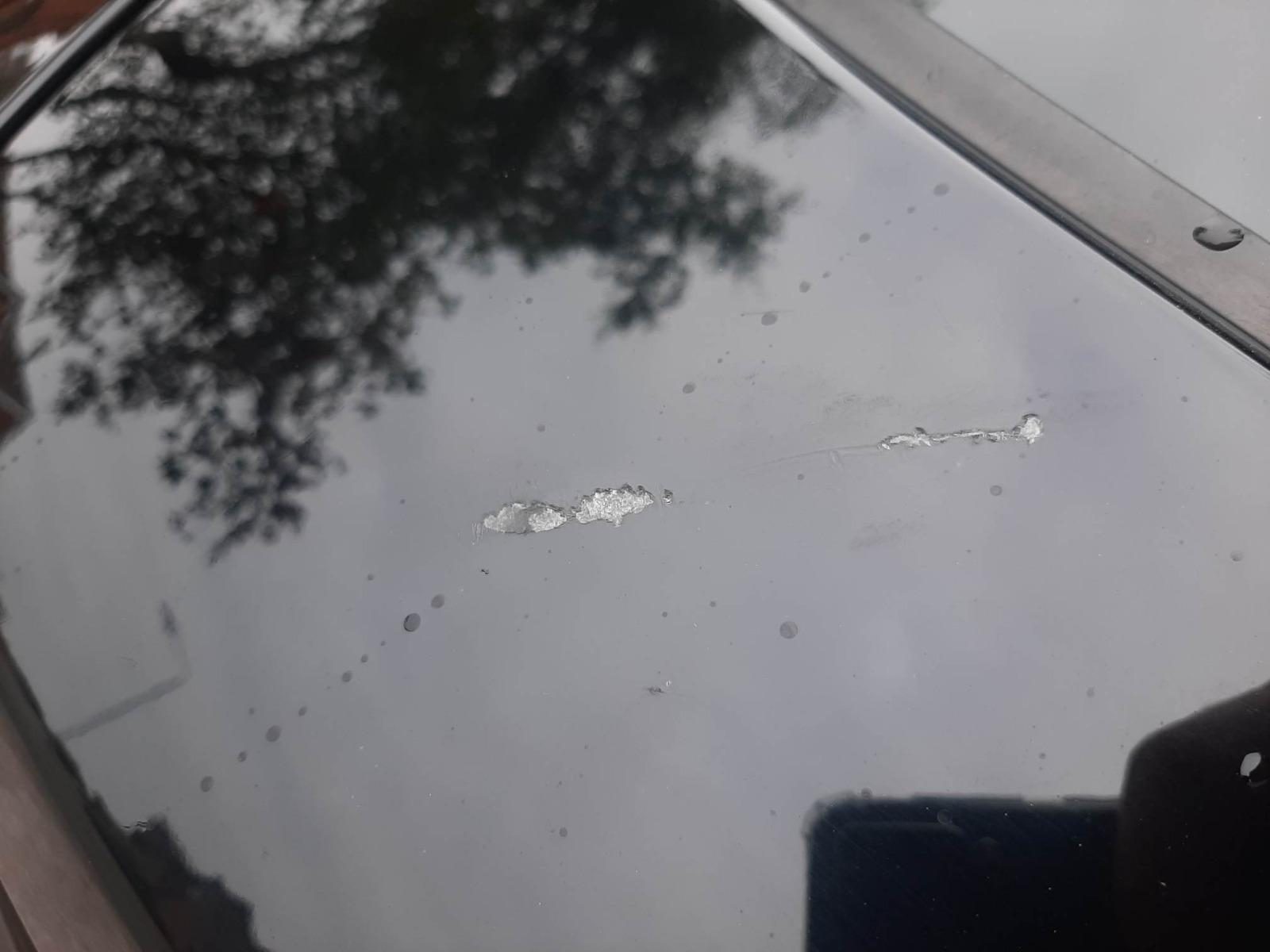
- Run a fingernail lightly across the mark. If your nail glides over it, the damage is in the clear coat and compound will remove it. If your nail catches or drops in, the paint is broken and polishing will not fill it.
Transferred paint is easy to spot once you know what to look for. It sits proud of the surface rather than in it, it is often a colour that has nothing to do with your car, such as white from a bollard or black from a rubber bumper strip, and it tends to sit in a band rather than a line. A clay bar, a tar and glue remover, or a light polish will lift most of it without touching your own paint at all.
How do you repair a light scuff yourself?
Work from the mildest option upwards and check your progress constantly.
- Wash and dry the panel. Grit trapped under a cloth will scratch as you work.
- Try a tar and glue remover or a clay bar first if the mark looks like transferred paint. Follow the product instructions and keep the surface lubricated.
- Move to a mild polish. Apply a small amount to a foam applicator or a folded microfibre and work it into the mark in overlapping straight passes over a small area at a time.
- Wipe and inspect after every 30 seconds or so. Use a torch at a shallow angle to see the true state of the paint.
- Step up to a cutting compound only if the polish is not shifting it. Aggressive compound removes clear coat, and there is not much of it to spare.
- Refine with a finishing polish to clear any haze the compound leaves behind.
- Protect the repair with a wax or a paint sealant once the panel is clean and dry.
Three things to avoid: working on a hot panel or in direct sunlight, where the product dries and grabs; scrubbing in tight circles, which concentrates heat in one place; and using an abrasive household product such as toothpaste or a kitchen cream cleaner, neither of which is designed for automotive clear coat.
What can touch in paint and scratch pens realistically do?
They fill damage. They do not level it, and they do not blend it. That distinction sets a hard limit on what a home paint repair can look like.
| Product | Works well on | Falls down on |
|---|---|---|
| Touch in paint bottle with brush | Stone chips, short scuffs through the colour on solid paint | Wide scuffs, metallics, anywhere the repair edge is visible |
| Scratch repair pen | Fine clear coat marks | Anything the fingernail catches on |
| Clear coat pen | Sealing a repaired chip | Restoring gloss over a large area |
| Aerosol in your paint code | Larger areas on solid colours | Blending into surrounding paint without a hard edge |
| Full DIY kit with abrasives | Tidying shallow scuffs before protecting them | Metallic and pearl finishes |
If you do use touch in paint, buy it against the paint code on the VIN plate rather than by describing the colour, degrease the area with panel wipe first, and build the colour up in several thin coats rather than one thick one. Let it sit slightly proud, leave it several days to harden, then flat the high spot back with 3000 grit and polish it level. Skipping the flatting stage is why most home touch in repairs end up as a shiny blob.
Metallic and pearl paints are the point where the DIY route usually stops making sense. Factory paint is sprayed, so the metallic flake lies flat and even and reflects light in one direction. Brush applied paint traps the flake at random angles, so even a perfect colour match reads as a dark patch from an angle. This is the single most common reason people end up at a body shop after a home attempt.
What do professional scuff repair methods involve?
Professional repair is about restoring the panel rather than covering the damage, and there are three main routes.
| Method | What happens | Best suited to | Typical turnaround |
|---|---|---|---|
| Machine polishing | Compound and polish applied by machine to level the clear coat | Scuffs and swirl marks that have not broken the colour | An hour or two |
| SMART repair | The damaged section is prepared, primed, painted and blended into the surrounding panel | Scuffs, scratches and chips confined to part of a panel | Same day, often on your drive |
| Panel respray | The whole panel is flatted, primed and refinished | Damage across the full panel, or several separate areas | Several days off the road |
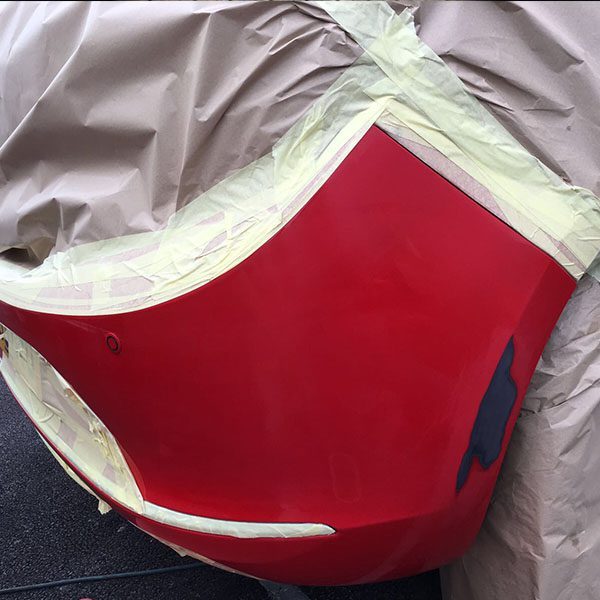
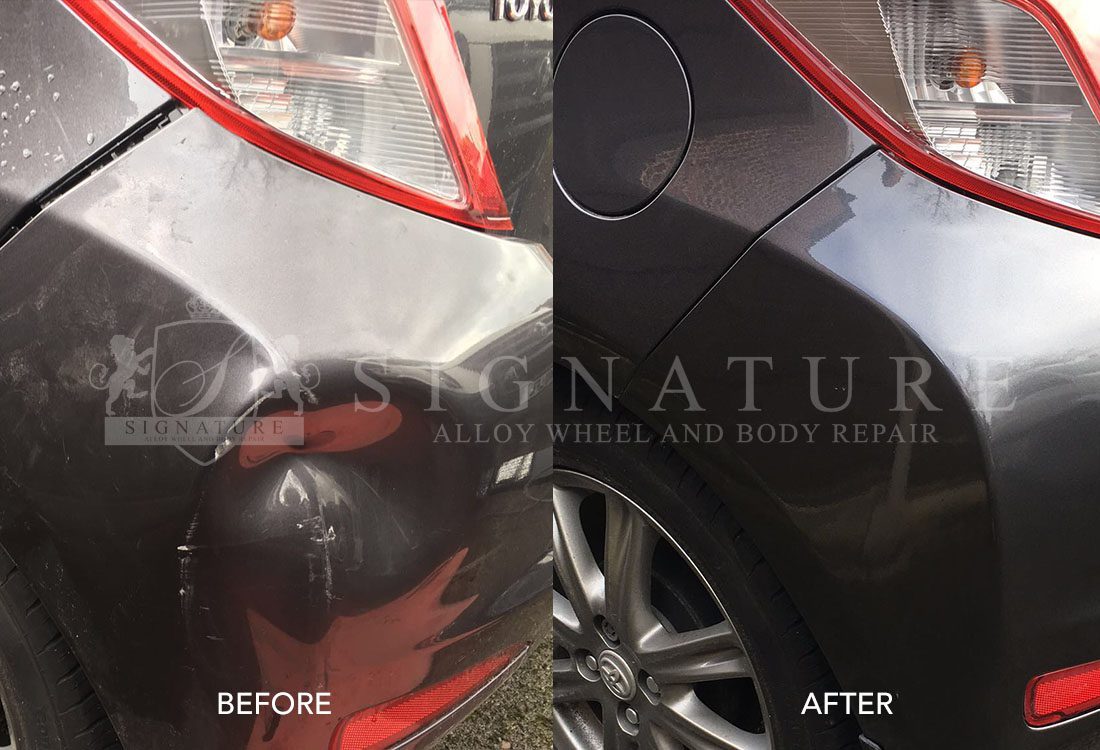
SMART repair stands for small to medium area repair technology, and it is the method most cosmetic damage on a modern car should be going through. Rather than treating the whole door or bumper, the technician works on the damaged section, feathers the edges out, sprays colour matched paint into the area and blends it outwards so there is no visible edge. Less material, less masking and no oven time means it is cheaper and quicker than a traditional repair, and the finish is guaranteed the same way.
Paintless dent removal often comes up in the same conversation. It is a dent technique rather than a scuff technique, but the two frequently arrive together after a knock in a car park, and a good body shop will assess which parts of the damage need each method rather than defaulting to paint for everything. Our scuff and scratch repair service is set up around that assessment.
How is a scuffed plastic bumper repaired?
A bumper scuff is repaired differently to a scuff on a metal panel, because the substrate is flexible plastic rather than steel. The scuffed area is flatted back, any raised or torn plastic is removed, and an adhesion promoter or plastic primer is applied so the new paint bonds to the surface. The colour is then sprayed and blended, and the lacquer often has a flex additive in it so the finish moves with the bumper instead of cracking the first time the car is loaded or knocked.
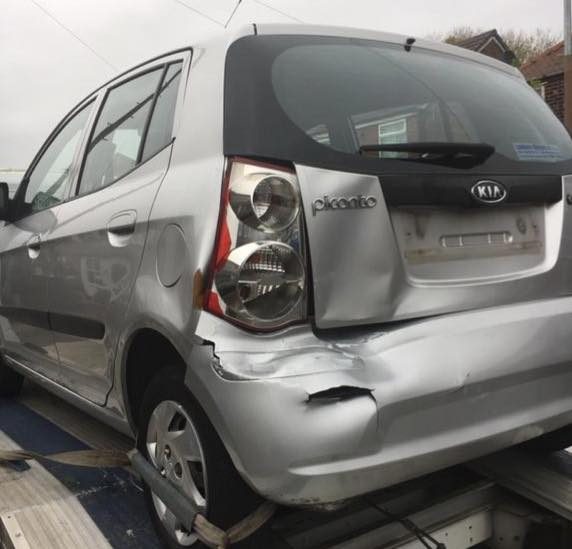
Two extras come up regularly on bumper work. Where the plastic has split rather than just scuffed, it can be plastic welded from behind and reinforced before the face is refinished, which is far cheaper than a new bumper. And where parking sensors, a camera or a radar unit sit in the bumper, they have to be removed, refitted correctly and in some cases recalibrated, which adds time to what would otherwise be a quick job. It is worth mentioning any driver assistance systems when you ask for a quote so the estimate reflects the real work.
What does a car scuff repair cost?
Cost is driven by area, colour and how the damage sits on the panel rather than by how bad it looks. The main factors:
- Size and depth of the scuff. Anything that fits within a section of a panel can be treated as a localised repair. Damage spread across a full panel means a full panel repaint.
- Number of panels involved. A single kerbed bumper corner is one repair. A scrape from wing to door to rear quarter is three.
- Paint type. Solid colours are the most straightforward. Metallics need blending. Three stage pearls and specialist finishes take longer to match and are priced accordingly.
- Location on the panel. Damage in the middle of a flat area is easier to blend than damage on an edge, a body line or right up against a light or a handle that has to come off first.
- Sensors and trim. Parking sensors, cameras and radar units mounted in bumpers add labour, because they have to be removed and refitted correctly.
As a general ranking, machine polishing is the cheapest option, a SMART repair sits in the middle, a panel respray is significantly more, and a panel replacement is the most expensive. A DIY kit is cheaper than all of them, but only if it works, and a failed home repair usually adds preparation work to the professional job that follows it.
Weigh the repair against what the damage costs you elsewhere. On a lease or PCP car, damage beyond the BVRLA fair wear and tear guidelines is recharged when the car goes back, and those charges are typically higher than getting the same damage repaired beforehand. On a car you own, visible scuffs come straight off a part exchange or private sale price.
How long does a scuff repair take?
A light polish takes minutes. A SMART repair takes a few hours, most of which is preparation and flash off time between coats rather than spraying. A full panel respray takes days, because the panel has to be prepared, painted, cured and then reassembled, and adjacent panels often need blending to match.
Mobile repair changes the maths for smaller jobs. Because a SMART repair needs only a small area treated, it can be carried out at your home or workplace, and the car is usable again the same day. That suits company car drivers and anyone who cannot lose a vehicle for a week.
Should you repair a scuff yourself or use a body shop?
Use this as the decision point rather than the size of the mark:
Do it yourself when:
- Your fingernail glides over the damage
- The mark looks like transferred paint from another object
- The paint is a solid colour and the area is small
- The car is one you own and keep, rather than one going back on a lease
- You are comfortable working slowly and stopping when it stops improving
Use a professional when:
- Your fingernail catches, or you can see primer or bare metal
- The paint is metallic, pearl or a specialist finish
- The damage crosses a body line, a panel edge or more than one panel
- There is a dent underneath the scuff
- The car is leased, financed or on a company fleet
- A previous attempt has made it worse
Professional repair also brings things a home repair cannot: paint mixed and checked against a sprayed test card, proper preparation and degreasing, forced curing, and a guarantee on parts and workmanship if something is wrong later. Signature has been carrying out cosmetic repairs since 2008 and works both from the body shop in Radcliffe and mobile across Greater Manchester, Lancashire, Cheshire, Merseyside and West Yorkshire.
Why leaving a scuff alone costs more later
A scuff that has broken the clear coat has removed the paint's UV and moisture barrier. What happens next depends on how deep it went:
- Through the clear coat only. The basecoat underneath is not UV stable on its own, so the colour fades and dulls in that patch over a year or two.
- Through to primer. Water sits against the primer, softens the edges of the surrounding paint and the damage starts to spread outwards as flaking.
- Through to metal. Corrosion starts, and on a British winter of salted roads it starts quickly. Rust creeping under the paint turns a small repair into panel work.
That is the practical case for dealing with scuffs early. It is not about appearance, it is that the repair only ever gets larger and more expensive from the moment the paint is broken.
How do you avoid scuffing your car?
- Park away from trolley bays, aisle ends and the tightest bays in a multi storey.
- Reverse into spaces where you can, so you have visibility coming out.
- Use the parking sensors and camera rather than judging kerbs by eye, particularly on low bumpers and side skirts.
- Leave the wheels a hand's width off the kerb when parking on the road, which keeps both the bumper corner and the alloy edges clear.
- Fit door edge guards or a boot lip protector if you regularly load heavy items or park in a narrow garage.
- Consider paint protection film on bumper corners, sills and the leading edge of the bonnet if you cover high mileage.
- Wash with two buckets and a grit guard, and keep the paint waxed or sealed so contamination has something to sit on other than the clear coat.
For bumper scuff repairs and other cosmetic damage, sending a couple of photos is usually enough to get a written quote back within 24 hours, which is the quickest way to find out whether a mark is a polish job or a paint job.
Need this doing properly?
Signature repairs alloy wheels and bodywork across Greater Manchester and the North West, mobile at your home or workplace. Free quotes answered within 24 hours.